Full nutrition details in the recipe card below ↓

Every recipe on FoodNearMe is tested to be anti-inflammatory, satisfying, and actually delicious — real food, real results, no shortcuts.
More about Joe →That first cool evening when summer finally starts letting go something warm, spiced, and deeply golden just makes sense. Anti-Inflammatory Ayurvedic Kitchari is that dish: lentils and rice simmered low and slow with turmeric, cumin, and ginger until everything becomes this thick, almost porridge-like bowl of pure comfort.
Last September, after a week of back-to-back shoots, I needed dinner to be comforting but not heavy and this was exactly that. The trick I’ve learned after testing it a dozen times is blooming the spices in ghee first, about 60 seconds, just until the cumin pops. That one step transforms the whole pot the color deepens, the aroma opens up, and it photographs like something out of a Jaipur cookbook.
Anti-Inflammatory Ayurvedic Kitchari Warm Satisfying Real Comfort in Every Bowl
Ingredients
Notes
- Veggies used: 1 cup chopped carrot (120 grams), 1 cup chopped zucchini (180 grams), 1 heaped cup broccoli (100 g), 1 heaping cup of spinach (40 grams), but you can substitute with any vegetables you prefer. For Instant Pot preparation, sauté the spices in oil first, then add all ingredients and cook on high pressure for 7-8 minutes. Release pressure naturally for softer kitchari or manually for firmer texture.
Why You’ll Love This Bowl
Some evenings you just need dinner to show up for you. This is that dinner one pot, minimal cleanup, and it doesn’t sit heavy the way a lot of comfort food does. It’s become a genuine go-to when the week has been a lot and the couch is calling.
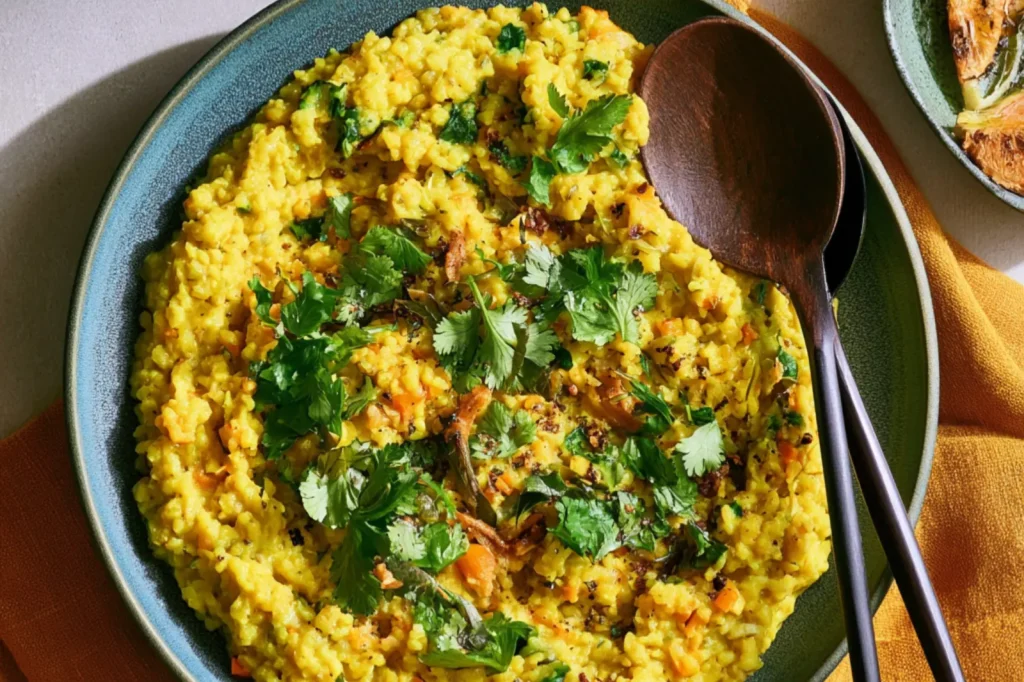
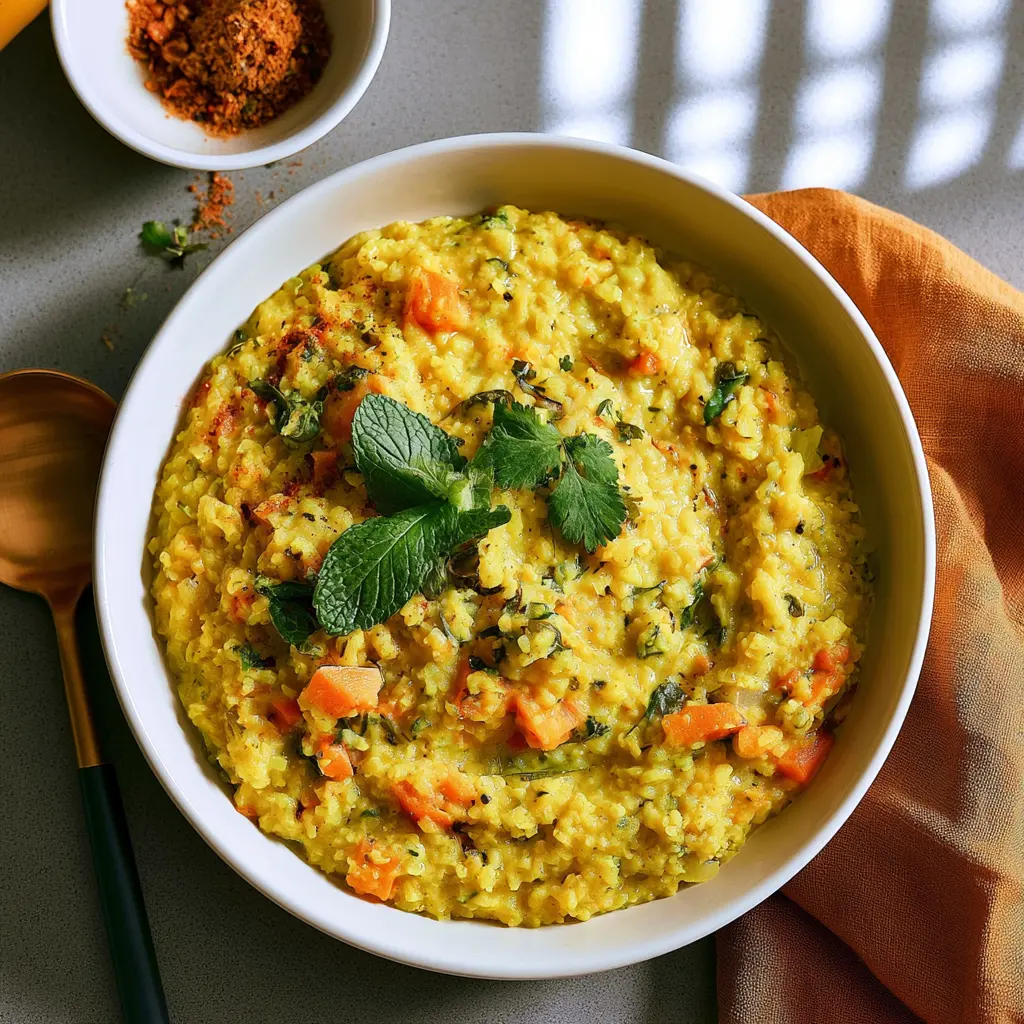
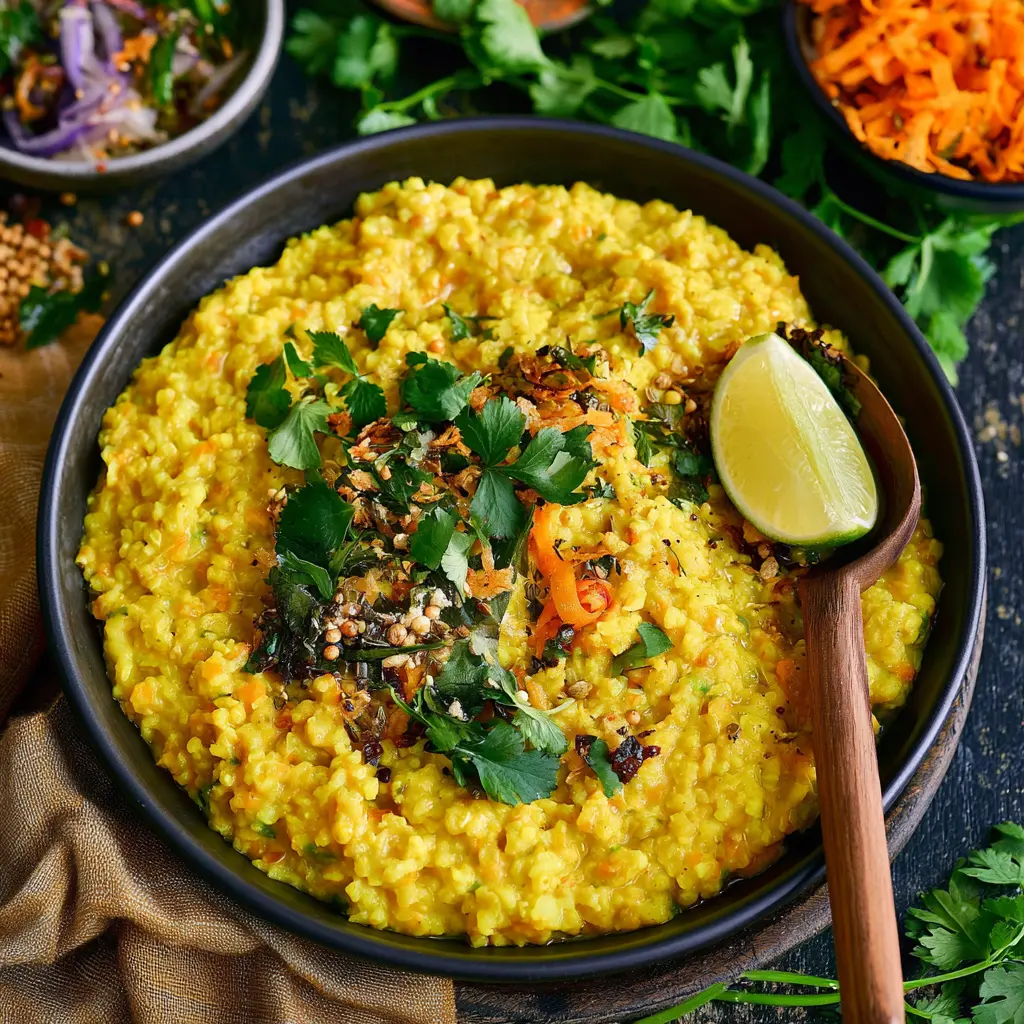
Beyond the ease, Ayurvedic Kitchari is the kind of meal that photographs like it took real effort. The turmeric turns everything a deep, burnished gold. A handful of fresh cilantro on top, a swirl of coconut milk it looks intentional without trying.
What Goes Into It
Every ingredient here earns its place. The moong dal breaks down into something silky and satisfying, while jasmine or basmati rice adds just enough body to make it feel substantial.
- Coconut oil the fat that carries all the whole spices without overpowering them
- Cumin, coriander, fenugreek, and mustard seeds bloom these first; they are the entire flavor foundation
- Fresh ginger and ground turmeric ginger adds brightness, turmeric brings the color and the warmth
- Moong dal and rice together they create that thick, porridge-like texture that makes this so comforting
- Coconut milk stirred in at the end for a creamy, gentle richness
- Chopped vegetables carrot, zucchini, broccoli, and spinach work beautifully, but use what you have
How to Make It
The whole process runs about 50 minutes, and most of that is hands-off simmering. Here is how it comes together:
- Heat coconut oil in a large pot. Add cumin seeds, coriander seeds, fenugreek seeds, and mustard seeds. Let them bloom for about 30 seconds until fragrant and beginning to pop.
- Stir in fresh ginger, ground turmeric, sea salt, and black pepper. Add your chopped vegetables and toss everything to coat.
- Add the moong dal, rice, and vegetable broth. Stir, bring to a simmer, and cook uncovered over low heat for 20 to 25 minutes. Cover and simmer another 10 to 15 minutes.
- Pour in the coconut milk and stir. Add spinach if using and simmer 5 more minutes until you reach your desired consistency. Adjust seasoning and serve.
Pro Tip: Letting the seeds fully pop before adding anything else is the single step most home cooks rush those extra 30 seconds are what make the color deepen and the aroma open up.
Can You Make Ayurvedic Kitchari Ahead of Time?
Absolutely, and it actually gets better the next day as the spices settle in. Store it in an airtight container in the fridge for up to 4 days. It thickens significantly as it sits, so add a splash of vegetable broth or coconut milk when reheating to bring it back to the right consistency.
Simple Swaps and Serving Notes
The recipe is forgiving by design. A few easy adjustments worth knowing:
- Swap moong dal for any red or green lentils if that is what is in your pantry
- Use basmati or jasmine rice interchangeably both absorb beautifully
- Any firm vegetable works: sweet potato, cauliflower, green beans, or whatever needs using up
- For a soupier result, add an extra half cup of vegetable broth toward the end
- Garnish with fresh cilantro or flat-leaf parsley both add a color contrast that makes the bowl look finished
Serve it straight from the pot with nothing else needed. It is a complete meal on its own, and the golden color alone makes it feel like something worth sitting down for.
FAQs ( Anti-Inflammatory Ayurvedic Kitchari )
What is kitchari and why is it considered anti-inflammatory?
Anti-Inflammatory Ayurvedic Kitchari is a one-pot healing meal made with spiced moong dal, rice, and vegetables. The turmeric, ginger, and cumin in this recipe are well-known for their anti-inflammatory and gut-supportive properties.
What is the difference between kitchari and dal?
Dal is a spiced lentil or bean soup served alongside rice, while this dish combines moong dal and rice together in one pot with vegetables for a complete, porridge-style meal.
Can I make kitchari without mung dal?
Yes, this recipe notes that lentils work as a direct substitute for moong dal. Use the same quantity and follow the same cooking steps.
How long does kitchari take to cook?
This one-pot meal is ready in about 50 minutes total – 15 minutes of prep and 35 minutes of cook time. The Instant Pot version cooks on high pressure for just 7-8 minutes.
What do you eat with kitchari?
This dish is a complete meal on its own, but it pairs well with fresh cilantro or parsley garnished on top. Add extra coconut milk or vegetable broth if you prefer a soupier consistency.

This Ayurvedic Kitchari comes together in about 50 minutes, and the payoff is genuinely stunning that deep burnished gold from the turmeric, the silky texture from the moong dal, the kind of bowl that looks like it took all afternoon. It’s especially satisfying on a weeknight when you want something wholesome without a lot of fuss.
A couple of things worth keeping in mind: don’t rush the spice bloom. Letting those cumin and mustard seeds fully pop in the coconut oil is the step that fills the whole kitchen with an incredible aroma. And if you have leftovers, they reheat beautifully just stir in a splash of vegetable broth to loosen things back up.
If you make this, share your bowl in the comments did you toss in sweet potato or keep it classic with zucchini and spinach? Tag a friend who could use a cozy dinner idea right now. Here’s to meals that help you find your rhythm again.