Full nutrition details in the recipe card below ↓

Every recipe on FoodNearMe is tested to be anti-inflammatory, satisfying, and actually delicious — real food, real results, no shortcuts.
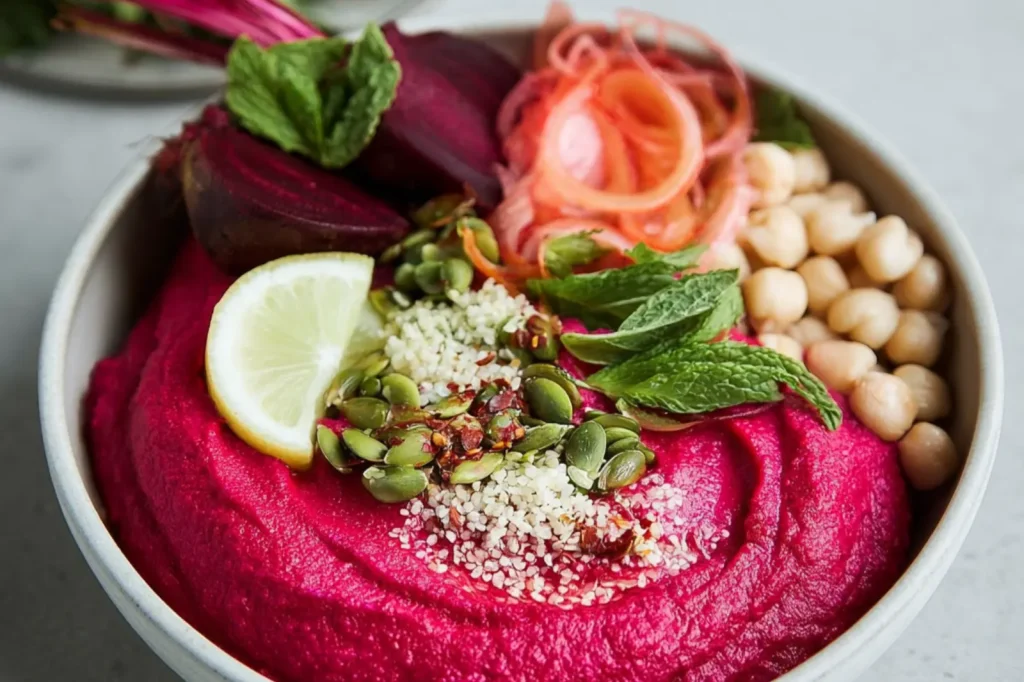
More about Joe →That deep magenta color stops you every time. The Anti-Inflammatory Beet Hummus Power Bowl is earthy, creamy, and stacked with roasted beets, fresh greens, and golden toppings that look almost too pretty to eat.
Last September, right when the evenings started cooling down but I still wanted something that felt light and alive on the plate, this bowl became my go-to reset dinner the kind of thing I’d reach for on a tired Tuesday when decision fatigue had completely taken over. After eight years shooting food, I’ve learned that color contrast tells you everything before the first bite, and the way roasted beets bleed into smooth hummus is genuinely one of the most beautiful builds I’ve ever documented. Getting the beet texture right tender but not mushy is the detail that pulls it all together.
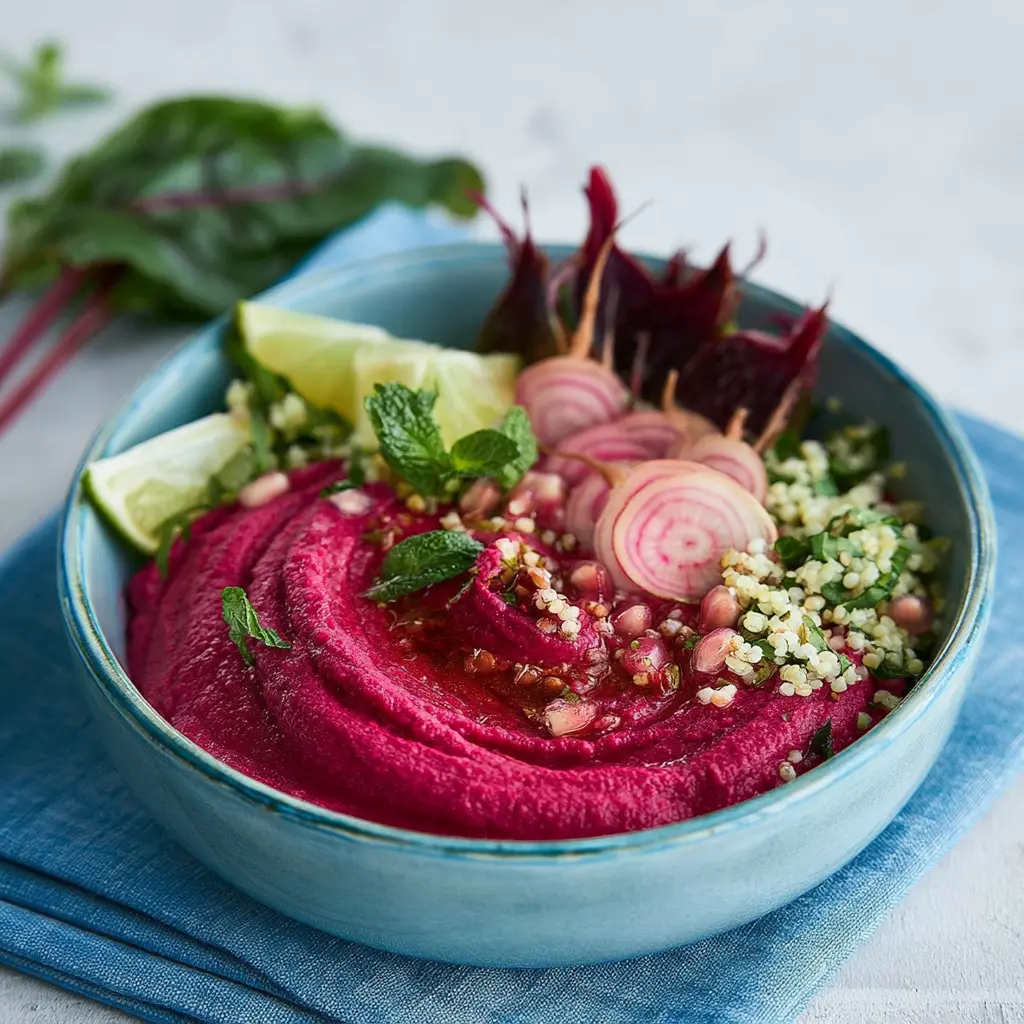
Anti-Inflammatory Beet Hummus Power Bowl Vibrant and Fresh Way to Love Real Nourishment
Ingredients
Notes
- For an extra zing, add a drizzle of pomegranate molasses if using lime juice. Serve this hummus alongside kale chips or vegetable chips for a crunchy contrast. Store leftovers in the fridge for up to 3 days in an airtight container.
Why You’ll Love This Bowl
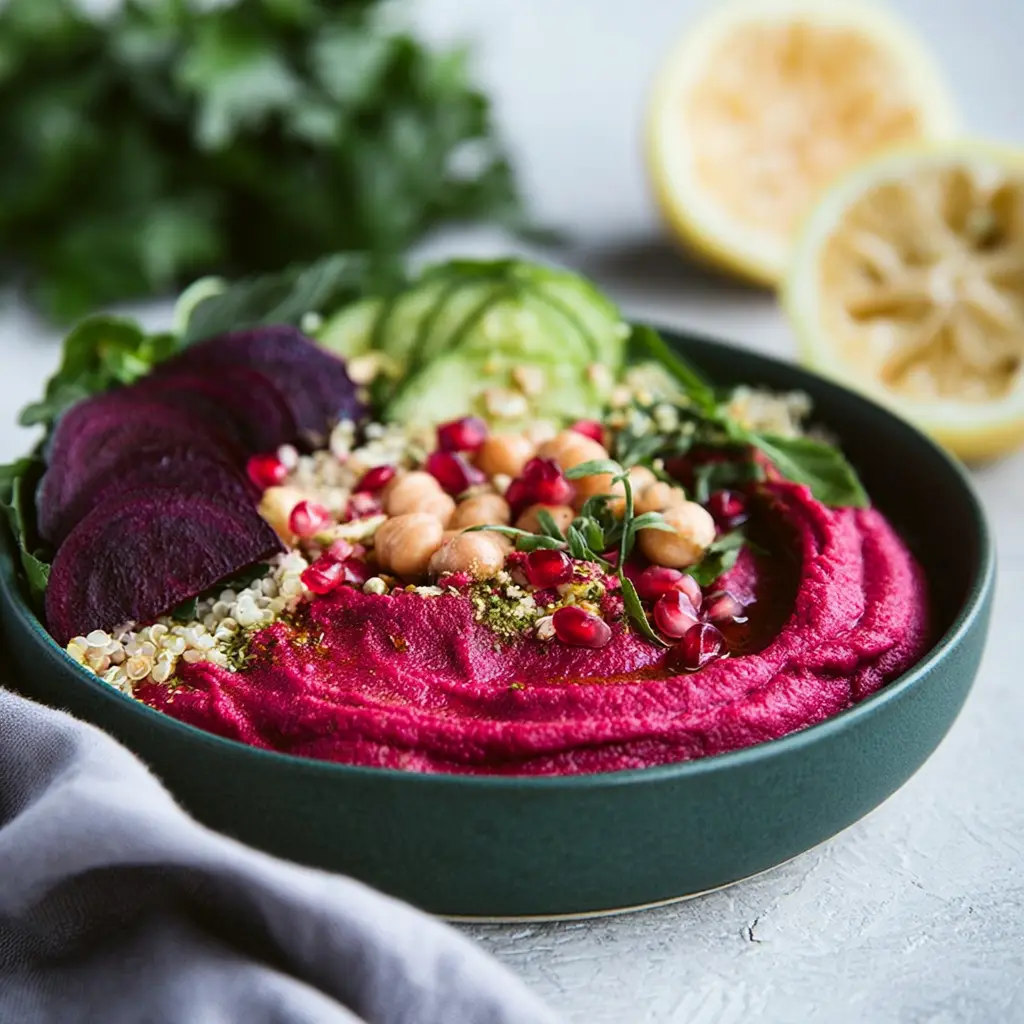
Here’s the honest truth this is the kind of meal that earns a permanent spot in your weeknight rotation without any convincing. The colors alone do the selling. Deep magenta hummus against toasted pine nuts and fresh mint is the kind of contrast that makes you slow down before you eat.
It’s the bowl I reach for when the evening went sideways and I still want dinner to feel like something intentional. Low effort, genuinely satisfying, and never heavy that’s the sweet spot this one lives in.
What Makes the Ingredients Work
Every element in this beet hummus power bowl is doing double duty flavor and function together. Nothing is decorative for decoration’s sake.
- Roasted beetroot slow-roasting in foil coaxes out natural sweetness and locks in that jewel-toned color
- Chickpeas the protein and prebiotic fiber base that makes this bowl genuinely filling
- Hulled tahini smoother than unhulled, it blends into pure creaminess without any bitterness
- Sumac a tart, fruity spice that lifts everything and keeps the flavor from going flat
- Lime-infused avocado oil with extra virgin olive oil the oil blend adds richness and a subtle citrus thread throughout
- Pomegranate molasses optional, but if you used lime instead of lemon, Thomas would tell you: do not skip this
Note: Raw garlic adds a sharp bite here. If you prefer something milder, use one clove rather than two.
How to Make It
The process is straightforward and mostly hands-off once the beet goes into the oven.
- Preheat oven to 200C (390F). Wrap the whole beetroot skin, root, and all tightly in tin foil.
- Roast for one hour. Remove from foil, let it cool completely, then slip the skin off and discard the root end.
- Chop the roasted beet into small pieces and add to your blender or food processor.
- Drain the chickpeas and add them to the blender along with the tahini, oil, garlic, lemon zest, lemon juice, sumac, salt, and pepper.
- Blend until completely creamy, stopping to scrape down the sides as you go.
- Taste, and if you used lime stir in the pomegranate molasses. You will not regret it.
- Spoon into a bowl, drizzle with extra oil, and finish with shredded fresh mint, toasted pine nuts, and sesame seeds. Serve alongside kale chips or vegetable chips.
Can You Make a Beet Hummus Power Bowl Ahead of Time?
Yes and it actually gets better the next day. The sumac and lemon settle into the hummus overnight, and the flavor deepens in a way that fresh-blended just can’t match.
- Store the blended hummus in an airtight container in the fridge for up to five days
- Keep toppings mint, pine nuts, sesame seeds separate until you’re ready to serve
- Kale chips are best added fresh; they soften quickly once plated
- A quick drizzle of oil before serving revives the texture beautifully
Simple Swaps Worth Knowing
After years of testing bowls like this one, the recipe holds up well with a few easy adjustments depending on what you have on hand.
- Lemon juice and lime juice are interchangeable both work, though lime pairs especially well with pomegranate molasses
- No lime-infused avocado oil? Plain extra virgin olive oil is a perfectly clean substitute
- Sesame seeds can replace toasted pine nuts if nut allergies are a concern
- Vegetable chips work just as well as kale chips for dipping and scooping
Pro Tip: Letting the roasted beet cool fully before blending keeps the hummus thick and vibrant rather than warm and loose.
FAQs ( Anti-Inflammatory Beet Hummus Power Bowl )
Can I use store-bought beet hummus for this power bowl?
Yes, store-bought works in a pinch, but this recipe builds its roasted, creamy depth from scratch using whole beets, tahini, sumac, and fresh lemon.
How do you make beet hummus from scratch?
Wrap a whole beetroot in foil and roast at 200C (390F) for one hour, then blend with chickpeas, tahini, garlic, lemon juice, sumac, and oil until creamy.
What toppings go on a beet hummus power bowl?
This dish is finished with fresh mint, toasted pine nuts, sesame seeds, and a drizzle of oil, served alongside kale chips or natural vegetable chips.
What protein pairs best with a beet hummus bowl?
The chickpeas in this recipe already deliver 7g of plant-based protein per serving, making it a satisfying, protein-rich meal on its own.
Can I make beet hummus power bowls ahead of time?
Yes – blend the hummus base ahead and store it chilled, then add fresh toppings like mint and toasted pine nuts just before serving.
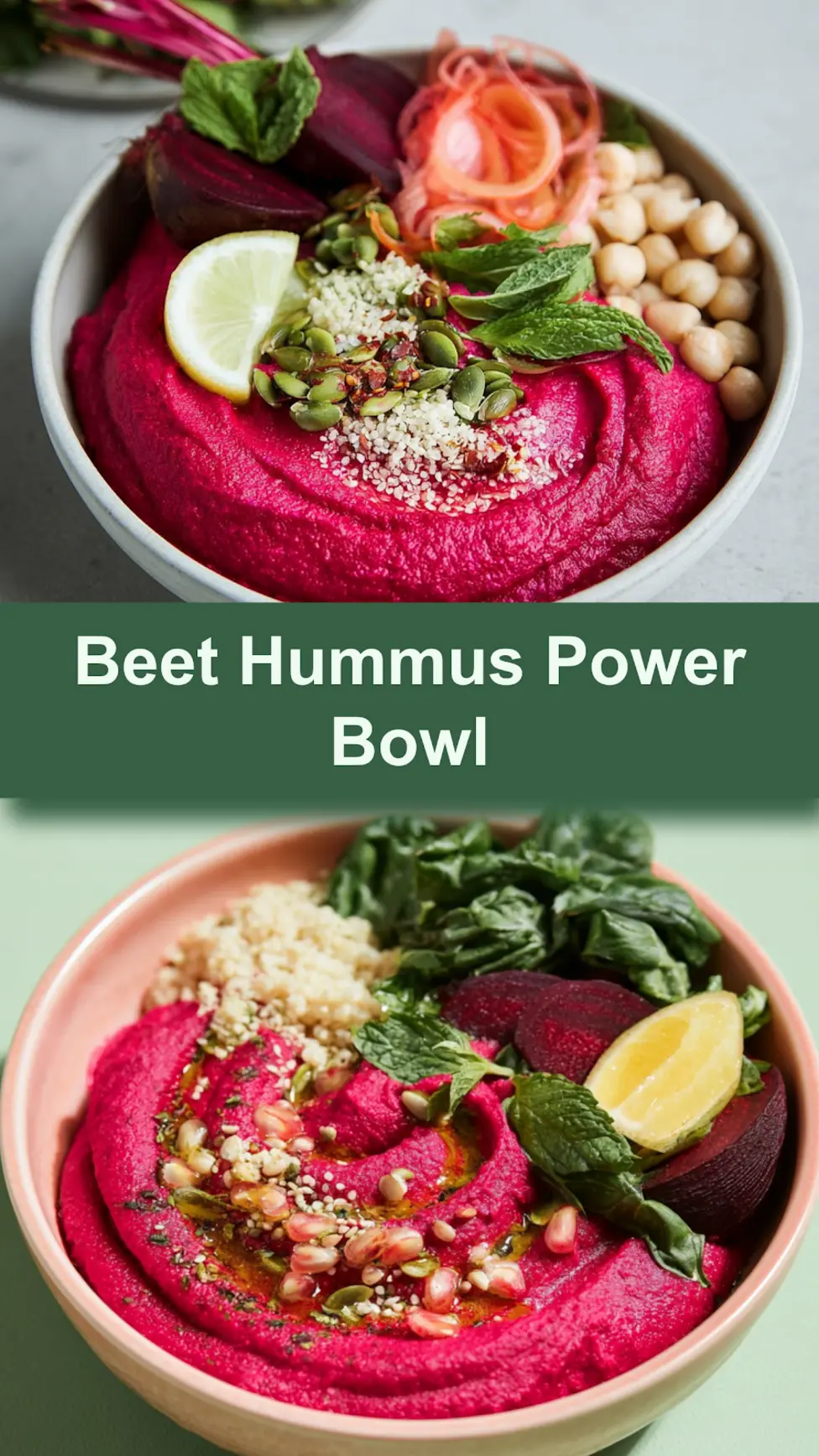
This Bowl Is Worth Every Bit of the Wait
Once that roasted beet cools and blends into a silky, jewel-toned base, the Beet Hummus Power Bowl comes together faster than you’d expect and the color payoff alone makes every step worth it.
One thing I always come back to: let the beet cool completely before blending it keeps that magenta so vivid and the texture genuinely thick. And if you used lime, please stir in the pomegranate molasses. It’s the kind of finishing touch that makes the whole bowl sing. Leftovers keep beautifully for five days, and honestly? Day two is better.
I’d love to see how yours turns out drop a photo in the comments or tag us, because that color deserves to be shared. Here’s to dinners that help you get back into a rhythm.