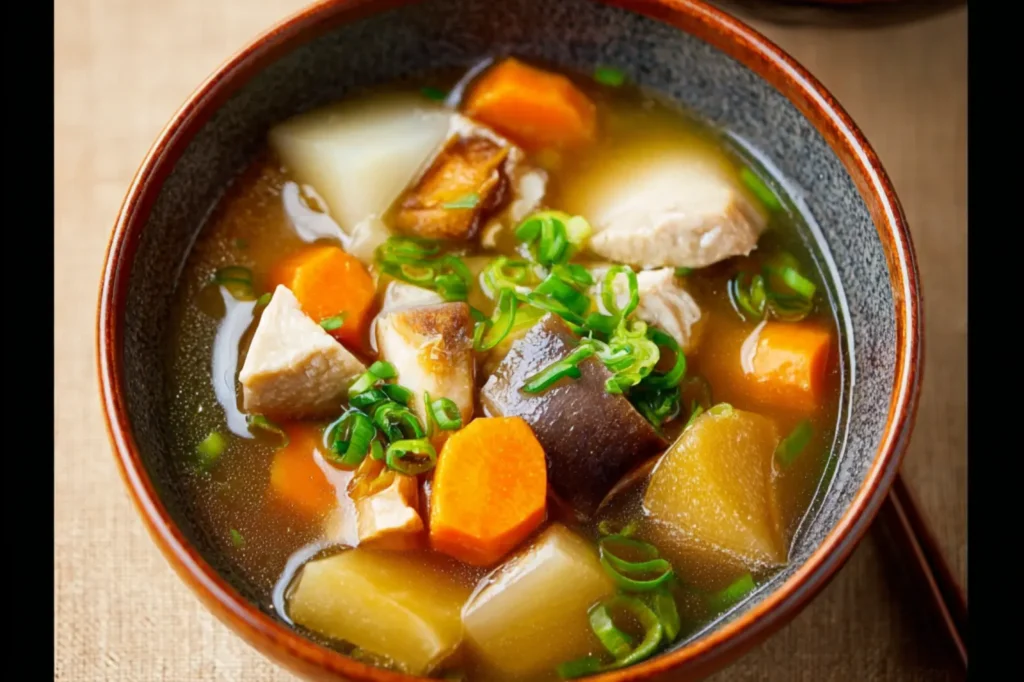
Full nutrition details in the recipe card below ↓

Every recipe on FoodNearMe is tested to be anti-inflammatory, satisfying, and actually delicious — real food, real results, no shortcuts.
More about Joe →There’s something about a clear, deeply savory broth with tender root vegetables that just stops you in your tracks. Japanese Kenchinjiru Root Vegetable Soup is a traditional Buddhist temple dish tofu, daikon, burdock, and earthy vegetables simmered in a clean kombu-based broth. No miso. No fuss. Just honest, layered flavor.
I started making this every fall when the evenings get shorter and decision fatigue hits hardest those nights when you need something real on the table without a lot of thinking. What I learned after testing this dozens of times is that the sesame oil hit at the end isn’t optional. It pulls everything together. The root vegetables absorb the broth slowly, and that patience is exactly what makes the whole pot taste like something you’d find in a quiet Japanese countryside kitchen.
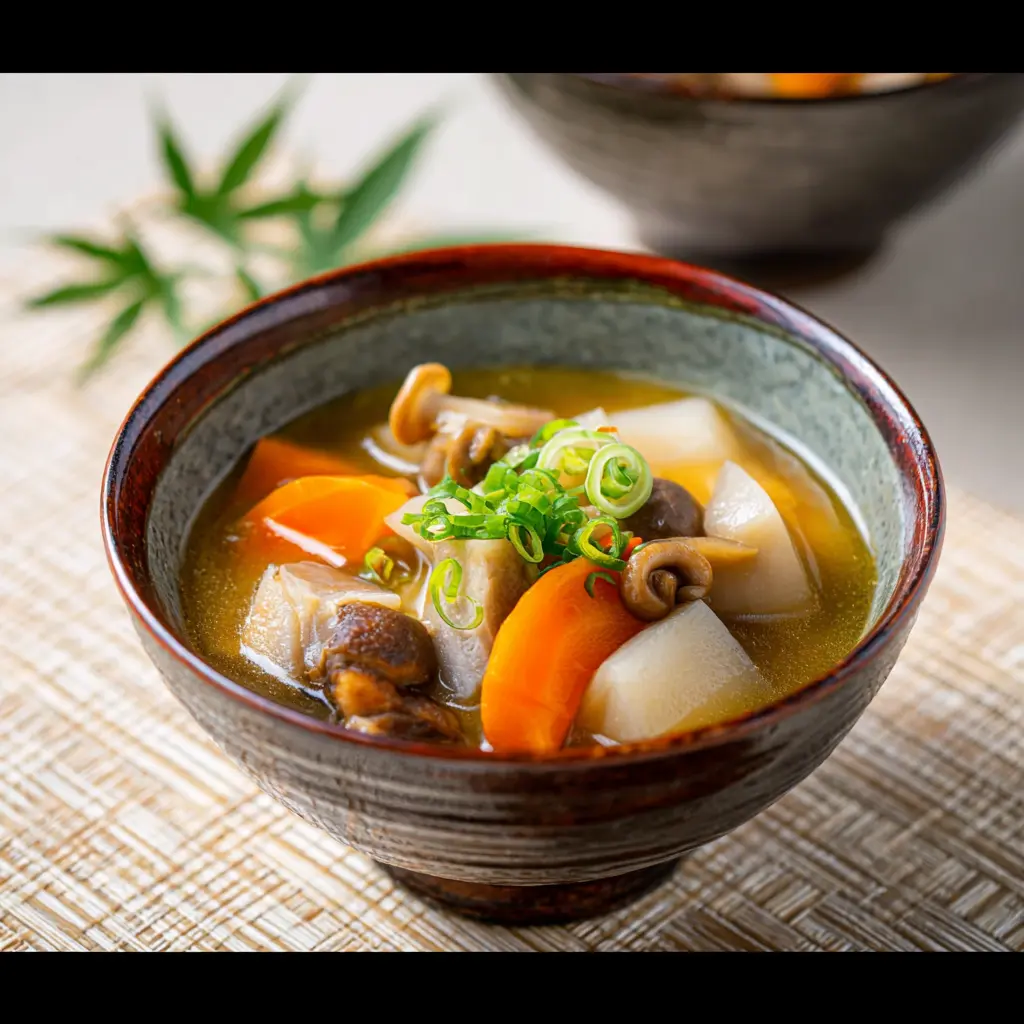
Japanese Kenchinjiru Root Vegetable Soup Warm Comforting Best New Way to Make It
Ingredients
Notes
- Store any leftovers in an airtight container or covered pot in the refrigerator for up to 2–3 days. For best flavor, prepare the kombu dashi the night before by soaking the kombu overnight. Optional garnishes like shichimi togarashi and Japanese sansho pepper add a nice spicy kick if you prefer.
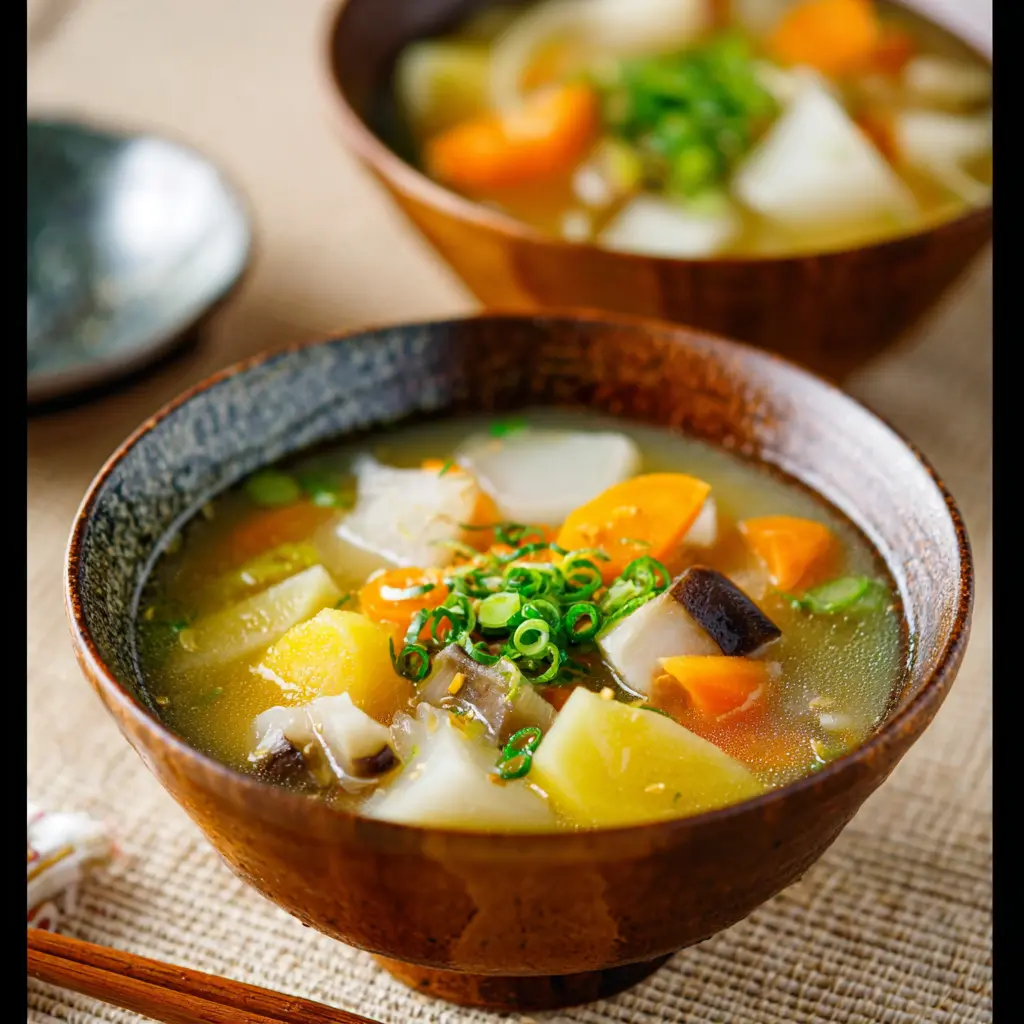
Why You’ll Love This Recipe
Here’s the honest truth this is the soup I make when the evenings start getting shorter and I’ve got nothing left to give after work. It comes together in under an hour, the broth does most of the heavy lifting, and the result feels genuinely nourishing without being heavy. Cozy without the slump.
Japanese Kenchinjiru Root Vegetable Soup is also completely miso-free, which surprises people. The kombu and shiitake dashi build a clean, layered broth all on their own deep and savory without any one ingredient taking over.
What You’ll Need: Key Ingredients
Every vegetable in this pot earns its place. Here’s what to know before you start:
- Kombu and dried shiitake mushrooms these build the vegan dashi base; don’t skip either one
- Gobo (burdock root) earthy and slightly bitter; soak it in water after slicing to mellow the flavor
- Daikon radish and carrot slice them thin so they cook evenly and absorb the broth quickly
- Taro (satoimo) soak sliced pieces in water to remove the natural sliminess before cooking
- Konnyaku (konjac) cut it with a spoon for a rough, uneven edge that grabs more flavor
- Firm tofu press it for 30 minutes, then tear by hand rather than cutting; the rough edges hold the broth beautifully
Note: The toasted sesame oil is a seasoning, not just a cooking fat it’s added at the sauté stage and carries the whole base.
How to Make Kenchinjiru Step by Step
The process is straightforward once your dashi is ready. After years of testing this style of Japanese broth, the single move that makes the biggest difference is sautéing the vegetables in sesame oil before any liquid goes in it builds a flavor foundation you can’t get any other way.
- Soak kombu overnight in 5 cups water. Bring slowly to a boil, remove kombu just before boiling, and set aside.
- Soak dried shiitake mushrooms in 1 cup water until soft. Squeeze out liquid, strain it, and reserve as shiitake dashi. Quarter the caps.
- Press tofu for 30 minutes. Boil konnyaku pieces for 2–3 minutes and drain. Peel and slice daikon, carrot, and taro; soak taro in water. Scrape and slice gobo; soak 5 minutes and drain.
- Heat a large pot with toasted sesame oil. Sauté daikon, carrot, taro, gobo, and konnyaku until coated in oil.
- Add shiitake mushrooms and hand-torn tofu. Sauté briefly, then add both dashis and bring to a boil.
- Simmer 10 minutes, skimming foam. Add sake and kosher salt, cook until vegetables are tender, then finish with soy sauce.
- Serve topped with sliced green onions and optional shichimi togarashi or sansho pepper.
Can You Make Kenchinjiru Ahead of Time?
Yes and it actually tastes better the next day. The root vegetables continue to absorb the broth overnight, and the flavors settle into something richer and more cohesive.
- Store in an airtight container or leave it in the pot
- Keeps in the refrigerator for up to 2–3 days
- Reheat gently over low heat a hard boil can break down the tofu
Simple Swaps to Know
This recipe is flexible without losing its character. A few practical options:
- No gobo (burdock root)? Parsnip offers a similarly earthy bite
- Can’t find taro? Yukon Gold potato holds up well in the broth
- Konnyaku is optional the soup still works without it
- For a milder finish, skip the shichimi togarashi and keep it clean with just scallions
Pro Tip: Keeping a pack of dried shiitake in the pantry is always a good idea they’re the backbone of a fast, flavorful broth whenever you need one.
FAQs ( Japanese Kenchinjiru Root Vegetable Soup )
What is kenchinjiru and what are its ingredients?
Japanese Kenchinjiru Root Vegetable Soup is a clear Buddhist temple soup made with tofu, konnyaku, daikon, carrot, taro, gobo, shiitake, and a kombu-based vegan dashi.
Is kenchinjiru vegan or vegetarian?
Yes, this recipe is fully vegan. The stock uses kombu and dried shiitake mushrooms, and all seasonings – sake, soy sauce, sesame oil, and salt – are plant-based.
What vegetables go in kenchinjiru soup?
This dish uses daikon radish, carrot, taro (satoimo), and gobo (burdock root), all peeled, sliced thin, and sauteed in sesame oil before simmering.
What is the difference between kenchinjiru and miso soup?
This meal is a clear, soy-sauce-seasoned root vegetable soup, while miso soup uses miso paste as its base. Kenchinjiru is heartier and built around sauteed vegetables.
Can I make kenchinjiru in advance?
Yes, this recipe stores well. Keep leftovers in an airtight container in the refrigerator for up to 2-3 days.
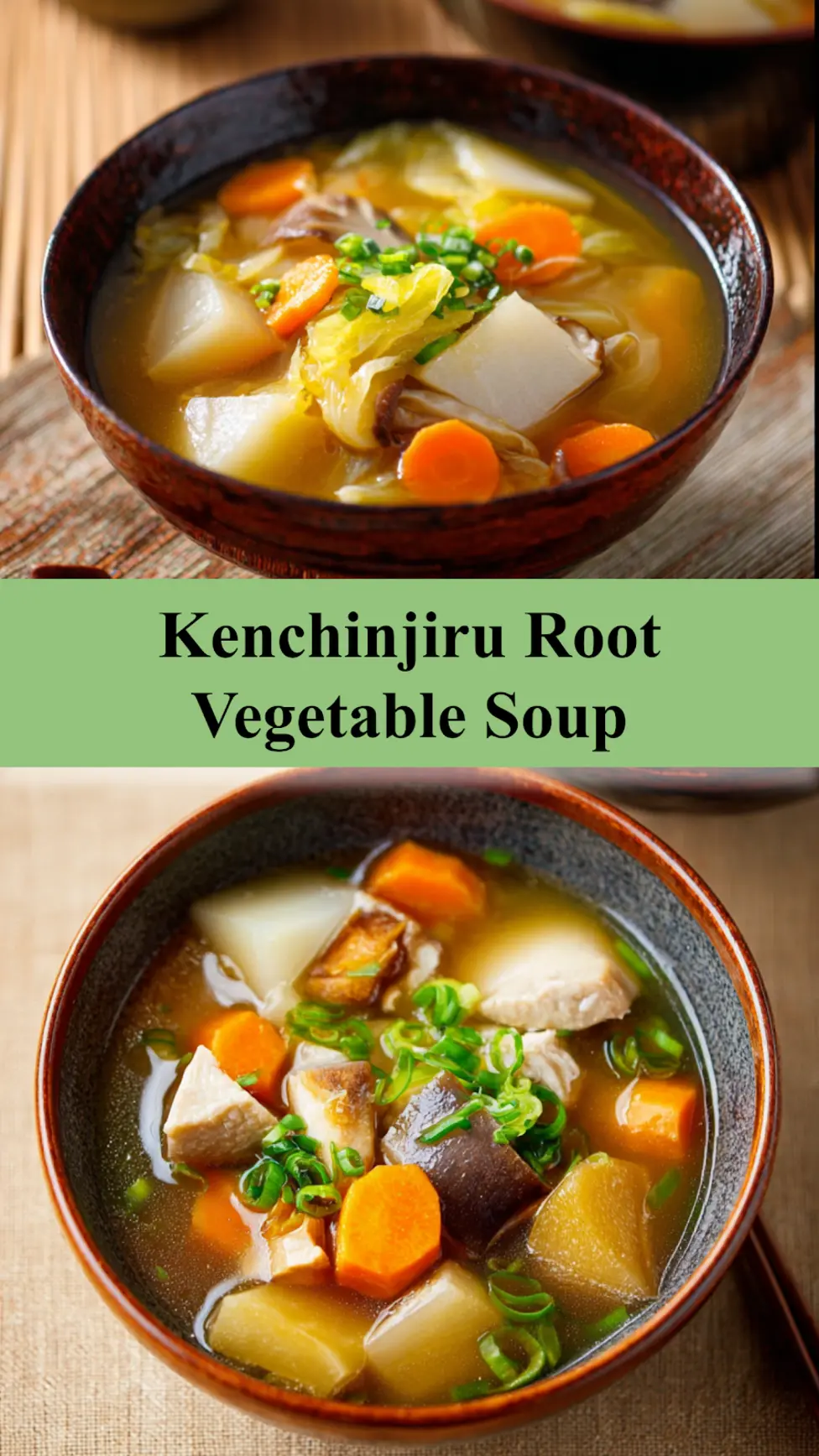
This Soup Will Change How You Think About Weeknight Cooking
One pot of Japanese Kenchinjiru Root Vegetable Soup and suddenly the whole evening shifts. The broth is clean, deeply savory, and ready in under an hour and those hand-torn tofu pieces soaking up the kombu dashi are something you really have to taste for yourself. Nothing complicated. Nothing heavy. Just a bowl that genuinely delivers.
A few things worth remembering: that toasted sesame oil at the sauté stage isn’t optional it builds the flavor foundation the whole soup stands on. If you can’t find burdock root, parsnip gives you that same earthy bite without a grocery store scavenger hunt. And make a big batch on purpose, because this soup tastes noticeably better the next day once those root vegetables have had time to settle into the broth. Reheat it low and slow the tofu will thank you.
Did you grow up eating something like this a quiet, brothy bowl that felt more like comfort than cooking? I’d love to hear about it in the comments. Share this one with someone who could use a gentle dinner at the end of a long day. Here’s to the meals that help you find your rhythm again.