
Every recipe on FoodNearMe is tested to be anti-inflammatory, satisfying, and actually delicious — real food, real results, no shortcuts.
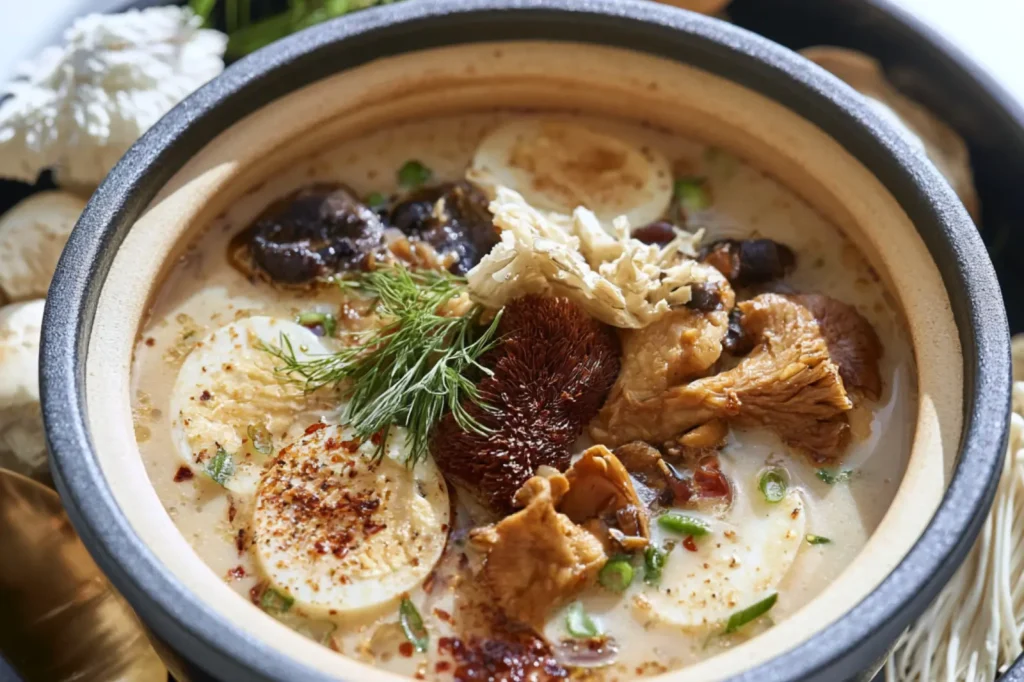
More about Joe →That first cool evening when you actually want something warm in a bowl that’s exactly when Immune Boosting Lion’s Mane Mushroom Soup earns its place on your stove. Rich, earthy, and genuinely satisfying without feeling heavy.
Last September, I picked up lion’s mane at my local HEB almost on a whim and after one bowl, I was hooked. It has this meaty, almost broth-soaked texture that holds up beautifully when you let it simmer low and slow. After spending years at Texas farmers markets learning how mushrooms behave with heat, I can tell you this one’s different worth the small extra step of tearing it by hand instead of slicing. It’s become my go-to on those tired fall weeknights when I still want a real dinner but need it to practically make itself.
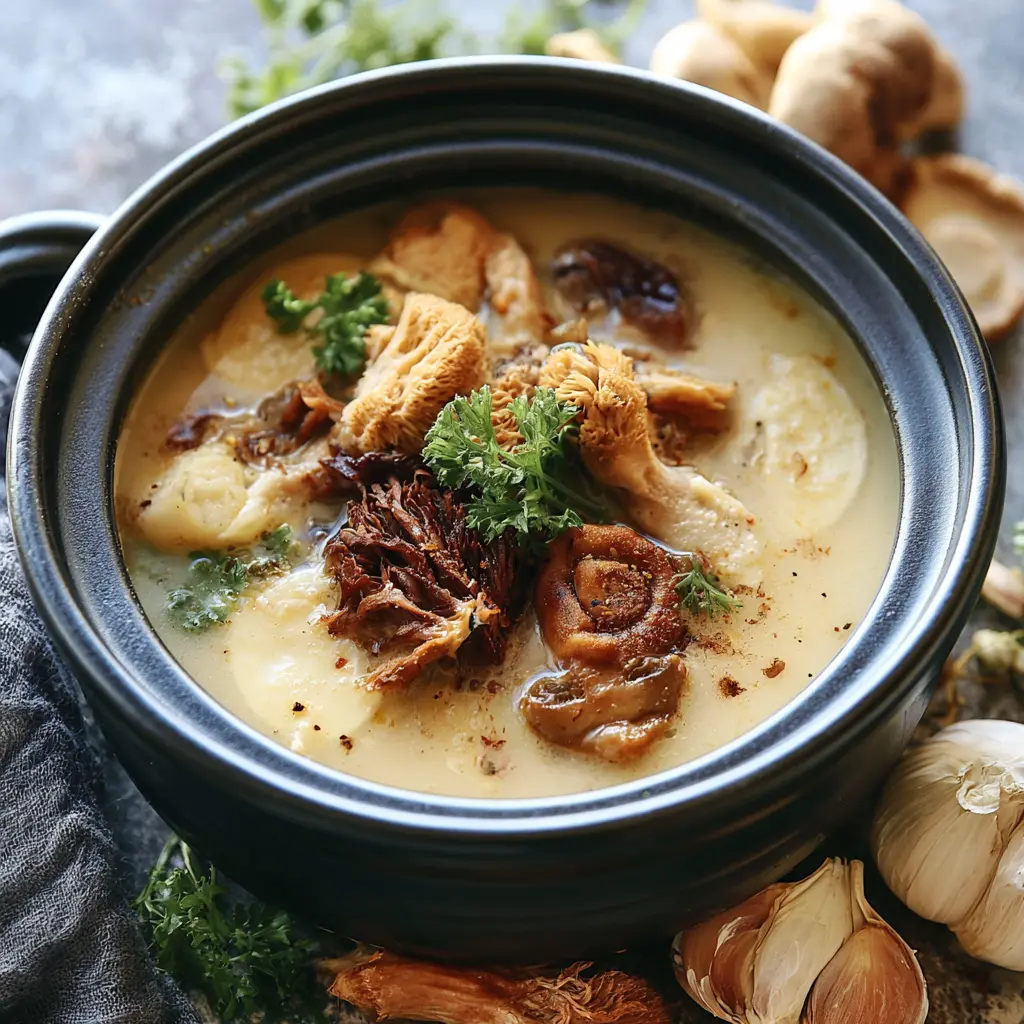
Immune Boosting Lions Mane Mushroom Soup Warm Satisfying Real Comfort
Ingredients
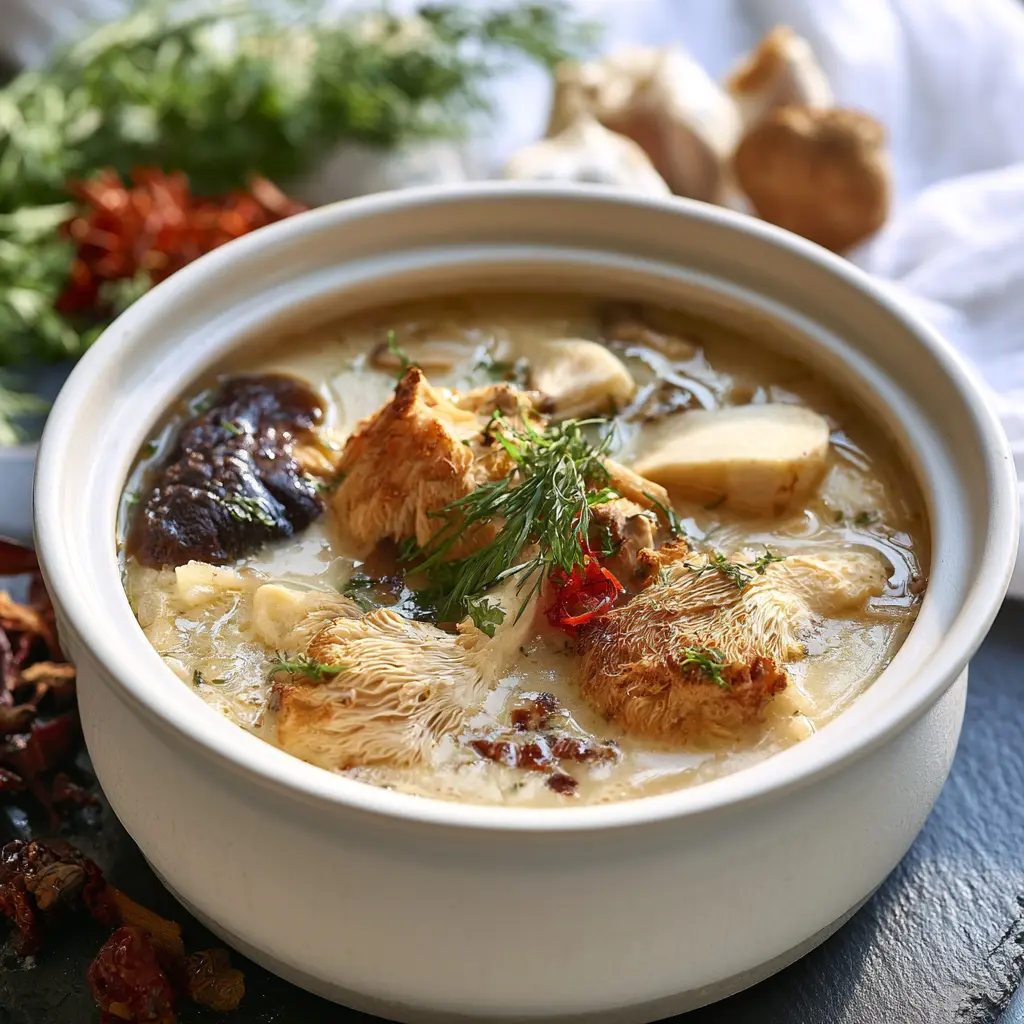
Why You’ll Love This Recipe
Here’s the honest truth this is the kind of soup that makes a tired Tuesday feel completely manageable. One pot, minimal prep beyond an overnight soak, and dinner practically finishes itself while you decompress. It’s cozy without being heavy, which makes it perfect for those first cool evenings when you want something real but don’t have the energy to fuss.
This lion’s mane mushroom soup also brings something most weeknight dinners don’t a quiet, grounding depth from the mushroom blend that you simply won’t find in a store-bought broth. It tastes like effort without actually requiring much of it.
What Goes Into This Soup
Every ingredient here pulls its weight. The mushroom lineup is what makes this recipe special, and each one plays a different role in the final flavor and body of the broth.
- Dried lion’s mane mushrooms the star; tear them by hand into pieces for the best texture after simmering
- Dried shiitake mushrooms adds deep, savory earthiness and a meaty bite
- Dried reishi mushrooms contributes a slightly bitter, woody note that rounds out the broth
- Dried cordyceps subtle in flavor but traditionally valued in Chinese food therapy
- Chicken bones blanched first to keep the broth clean and clear
- Ginger root brings warmth and cuts through any heaviness
- Shaoxing wine adds a gentle savory complexity you’ll notice immediately
- Sea salt simple, clean seasoning that lets the mushrooms shine
The Step That Makes All the Difference
Soaking the mushrooms overnight isn’t optional it’s the foundation of the broth. That soaking liquid gets filtered and added right back into the pot, carrying all the concentrated mushroom flavor with it. After years of working with dried mushrooms at market stalls and in home kitchens, Yesica will tell you: don’t skip this step, and don’t throw that water away.
The blanching step for the chicken bones is equally important. It draws out impurities and keeps your final broth clear and clean-tasting rather than cloudy or muddy.
How to Make It
- Soak all four dried mushrooms in 3 cups of water for a minimum of 8 hours or overnight.
- Remove the mushrooms, filter the soaking liquid to remove sediment, and set it aside.
- Submerge chicken bones in a pot of cold water, bring to a boil, then discard the water and rinse the bones clean.
- Add blanched chicken bones to a large pot. Tear the lion’s mane into pieces, cut large shiitakes in half, and add all the mushrooms along with sliced ginger, filtered soaking liquid, 3 more cups of water, sea salt, and Shaoxing wine.
- Bring to a boil over high heat, then reduce to medium-low and simmer covered for 40 minutes. Serve hot.
Pro Tip: A clay soup pot holds heat gently and evenly, which suits this long, slow simmer beautifully but any heavy-bottomed pot works just fine.
Can You Make This Soup Ahead of Time?
Absolutely and it actually tastes better the next day once the broth has had time to settle and deepen. Store leftovers in an airtight container in the fridge for up to 3 days, or freeze for up to 2 months.
- Reheat gently on the stovetop over low heat avoid boiling again
- Store the mushrooms and broth together so nothing dries out
- If freezing, leave out the chicken bones before storing for easier reheating
Note: The soaking step can be done the night before so the actual cook day feels almost effortless just blanch, build, and simmer.
FAQs ( Immune Boosting Lion’s Mane Mushroom Soup )
What does lion’s mane mushroom taste like?
Lion’s mane has a mild, slightly seafood-like flavor with a tender, meaty texture. In this recipe, it absorbs the earthy broth beautifully, making it cozy and deeply nourishing.
Where can I buy lion’s mane mushrooms?
Dried lion’s mane mushrooms are available at most Asian grocery stores and online retailers across the US. This recipe uses 40 grams of the dried variety.
Can I use dried lion’s mane instead of fresh?
Yes – this recipe is specifically built around dried lion’s mane mushrooms, soaked for a minimum of 8 hours before cooking.
What broth works best for lion’s mane mushroom soup?
This dish uses chicken bones simmered with mushroom soaking liquid, ginger, and Shaoxing wine for a rich, restorative base in the traditional Chinese food therapy style.
What are the immune boosting benefits of lion’s mane mushroom?
Lion’s mane is traditionally used in Chinese food therapy to support overall wellness. This meal also combines reishi and cordyceps, both valued for their nourishing, immune-supportive properties.
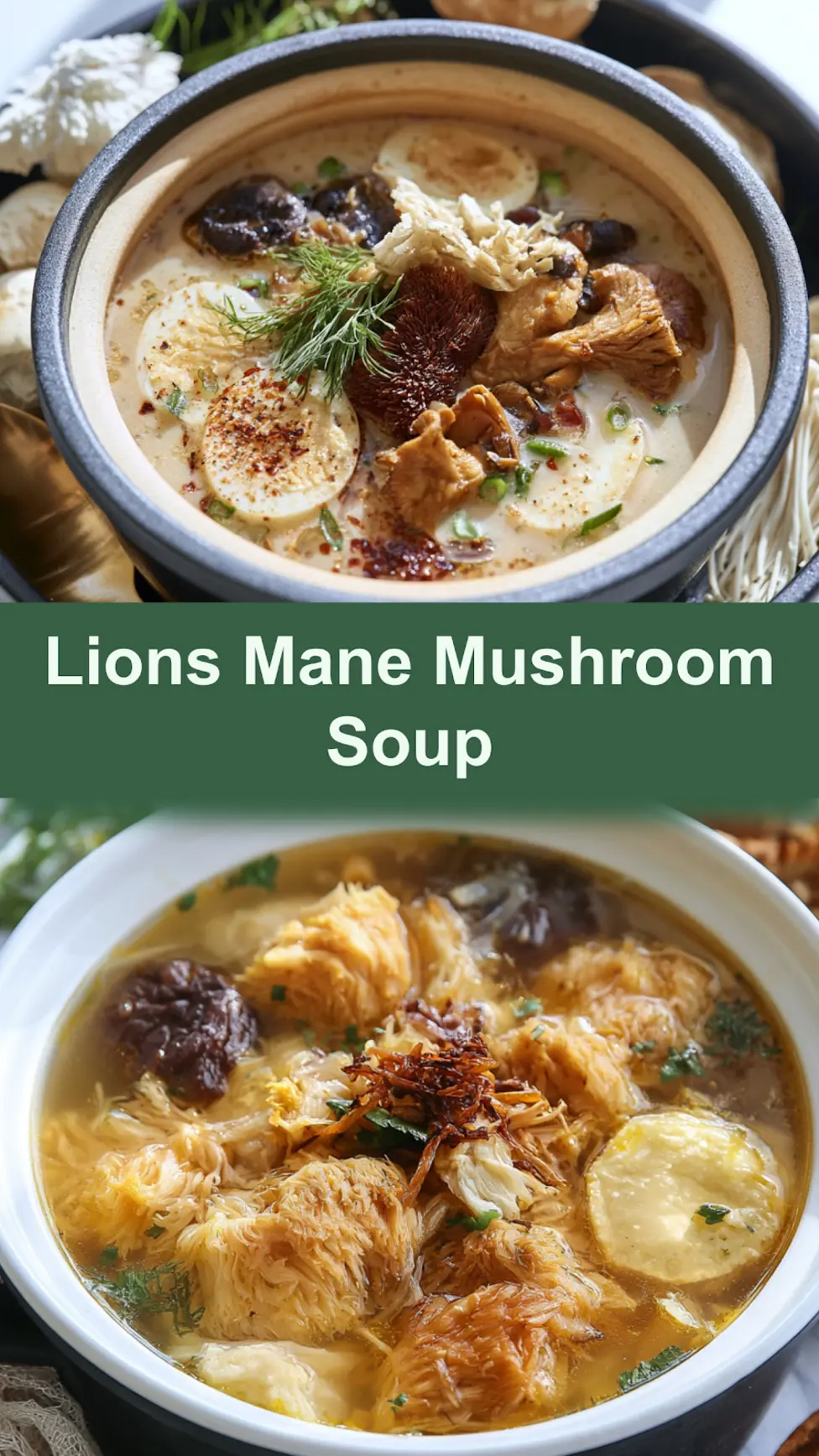
This Lion’s Mane Mushroom Soup comes together in one pot with minimal effort and what you get in that bowl is genuinely worth the overnight soak. The broth turns silky and deep, the mushrooms hold their texture beautifully, and the whole thing fills the kitchen with a warmth that feels both familiar and restorative.
A couple of things worth keeping in mind: tear the lion’s mane by hand it makes a real difference in how it absorbs the broth and never discard your mushroom soaking liquid. That filtered water is where all the concentrated flavor lives. If you’re planning ahead, this soup stores beautifully and honestly tastes even better the next day once everything has had time to settle together. Reheat it low and slow, and it’ll taste like you just made it fresh.
Did you grow up eating mushroom soups or broths that felt restorative in a way that’s hard to explain? Drop a comment below I’d love to hear about it. And if you make this one, tag me so I can see how it turned out. This is exactly the kind of recipe worth passing along to a friend who needs a simple, soul-warming dinner in their rotation. Save it, share it, and here’s to dinners that help you find your rhythm again.