Full nutrition details in the recipe card below ↓

Every recipe on FoodNearMe is tested to be anti-inflammatory, satisfying, and actually delicious — real food, real results, no shortcuts.
More about Joe →There’s something about a bowl of golden, spiced porridge that just settles you no drama, no fuss, just warmth. Ayurvedic Kitchari Healing Soup is that kind of dish: one pot, split mung beans, basmati rice, and a handful of turmeric-forward spices that turn humble ingredients into something deeply satisfying.
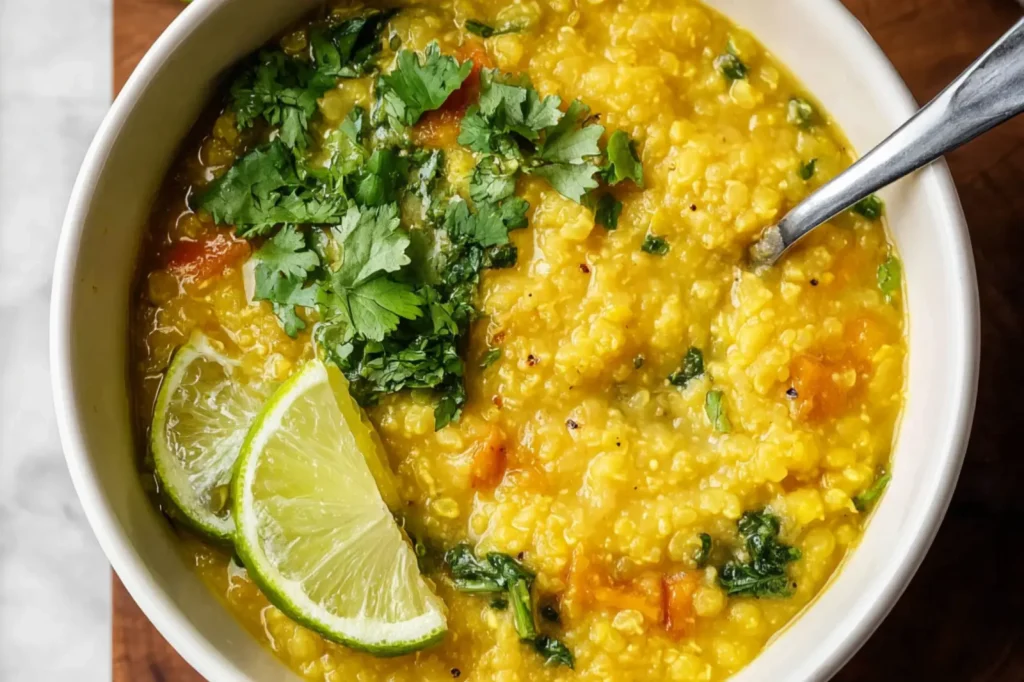
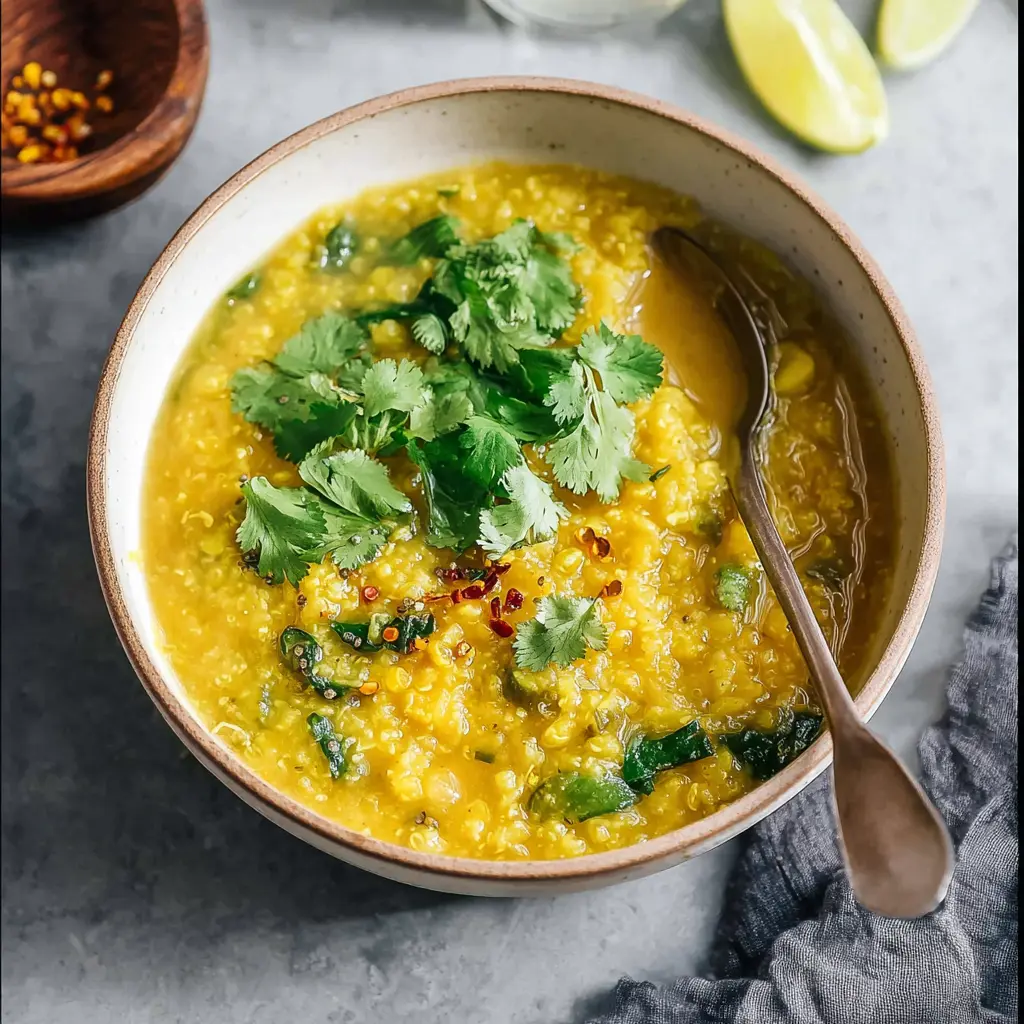
I first shot this dish in early fall that in-between week when evenings get darker faster and you’re not ready for heavy winter food but summer salads aren’t cutting it anymore. After a long day of back-to-back shoots, I needed dinner to basically make itself. The key visual trick I noticed during testing: toast the cumin and coriander dry before adding anything else it deepens the color of the whole pot and you can actually smell when it’s ready. Eight years behind a lens, and that amber-gold moment still stops me every single time.

Ayurvedic Kitchari Healing Soup Warm Comforting Best Way to Nourish Your Body
Ingredients
Notes
- Split mung beans, also known as moong dal, may be hard to find in regular grocery stores; consider buying organic moong dal online. To store, let the kitchari cool completely before refrigerating it in an airtight container for 2 to 3 days. For longer storage, freeze in a freezer-safe container for up to 2 months and thaw before reheating. Reheat on the stovetop, stirring in about ¼ cup of water for each cup of kitchari to maintain its creamy texture.
Why You’ll Love This Recipe
Here’s the honest truth this is the bowl you reach for when the evening has already been too long and you still want dinner to feel like dinner. One pot, minimal prep, and it comes together in about 40 minutes without hovering over the stove.
This Ayurvedic Kitchari Healing Soup lands in that rare sweet spot: deeply warming but never heavy, filling but still light enough that you don’t regret it afterward. The golden color alone makes it feel like you did something special even on a Tuesday.
What You’ll Need
The ingredient list is short, and every item earns its place in the pot.
- Moong dal (split mung beans): The base of the dish soft, protein-rich, and easy to digest. Hard to find at most grocery stores, but reliably available online.
- Basmati rice: Cooks down into that signature porridge-like texture alongside the dal.
- Ghee or butter: Use avocado oil to keep it fully plant-based.
- Cumin seeds: Toast them first the pot changes color when they hit the heat.
- Ground turmeric and fresh ginger: Minced fresh ginger gives a brighter bite; ginger powder works in a pinch.
- Sea salt and black pepper: Season at the end and adjust to taste.
- Fresh cilantro and lime or lemon slices: For garnish don’t skip them. The brightness cuts through the richness.
How to Make Kitchari
Soak the rice and moong dal together for 15 minutes, then rinse until the water runs clear. That step shortens the cook time and improves the final texture.
- Warm ghee or butter (or avocado oil) in a medium pot over medium-low heat.
- Add cumin seeds and let them cook for about a minute until fragrant and starting to brown.
- Stir in the minced ginger and ground turmeric.
- Add the rinsed rice and dal mixture. Season with sea salt and black pepper, then pour in 4 cups of water.
- Bring to a gentle boil, then reduce to a simmer. Cook uncovered for 30 minutes, stirring occasionally, until the mixture is soft and creamy.
- Taste, adjust seasoning, and serve topped with fresh cilantro and a squeeze of lime or lemon.
Pro Tip: After years of testing this one, Thomas found that the cumin seeds are ready when you can smell them before you see them brown pull back the heat the moment that happens.
Can You Make Kitchari Ahead of Time?
Yes and it actually holds up beautifully. The texture thickens as it sits, which is easy to fix when reheating.
- Fridge: Store in an airtight glass container for up to 2 to 3 days.
- Freezer: Transfer to a freezer-safe container for up to 2 months. Thaw fully before reheating.
- To reheat: Warm on the stovetop and stir in about one-quarter cup of water per cup of kitchari to bring back the porridge consistency.
Simple Swaps Worth Knowing
The recipe is forgiving, and a few easy substitutions keep it accessible no matter what’s in your pantry.
- Swap ghee for avocado oil to make it fully vegan-friendly.
- Use a pinch of ginger powder if fresh ginger isn’t available slightly less bright, but it works.
- Can’t find moong dal locally? Order organic split mung beans online they store well and last through several batches.
- Lime and lemon are interchangeable for garnish use whichever is on hand.
FAQs ( Ayurvedic Kitchari Healing Soup )
What is kitchari and what are its health benefits?
Ayurvedic Kitchari Healing Soup is a traditional Indian porridge made with yellow split mung beans, basmati rice, and warming spices like turmeric and ginger. It is widely used in Ayurvedic practice to support digestion and reduce inflammation.
Is kitchari good for digestion and inflammation?
Yes – this dish includes turmeric and ginger, two spices traditionally valued for their digestive and anti-inflammatory properties. The soft, creamy porridge texture also makes it easy on the digestive system.
What is moong dal and where do I find it?
Moong dal is yellow split mung beans, a staple in Indian cooking. It can be hard to find at standard grocery stores, so look for organic moong dal at Indian markets or online.
Can I make kitchari in the Instant Pot?
This recipe is written for stovetop cooking with a 30-minute simmer. Instant Pot instructions are not included, so check your recipe card or consult a pressure cooker conversion guide.
Can I add vegetables to kitchari?
The base recipe does not include vegetables, but this meal is flexible by nature and commonly customized in Ayurvedic cooking. Add vegetables that cook through during the 30-minute simmer for best results.
Can I make kitchari vegan?
Yes – simply swap the butter or ghee for avocado oil to make this dish fully vegan. All other ingredients in the recipe are plant-based.

One Bowl That Earns Its Place on the Table
That amber-gold color in the pot is how you know the Ayurvedic Kitchari Healing Soup is doing exactly what it’s supposed to do one pot, about 40 minutes, and the kind of soft, creamy texture that wraps around you like a warm sweater on a harder evening.
Toast those cumin seeds first and don’t rush them the smell tells you before the color does, and that’s the moment the whole pot deepens into something genuinely beautiful. If you’re reheating leftovers the next day, just stir in a splash of water and it comes right back to life. Don’t skip the cilantro and lime at the end either that bright finish is what makes the whole bowl feel complete, not just warm.
If you made this one tonight, drop a photo in the comments or tag us that golden color photographs better than almost anything. Did you grow up eating something similar? A spiced rice porridge, a dal your grandmother made? Share it below. Save this one for a friend who needs a soft landing on a hard week. Here’s to dinners that help you find your rhythm again.