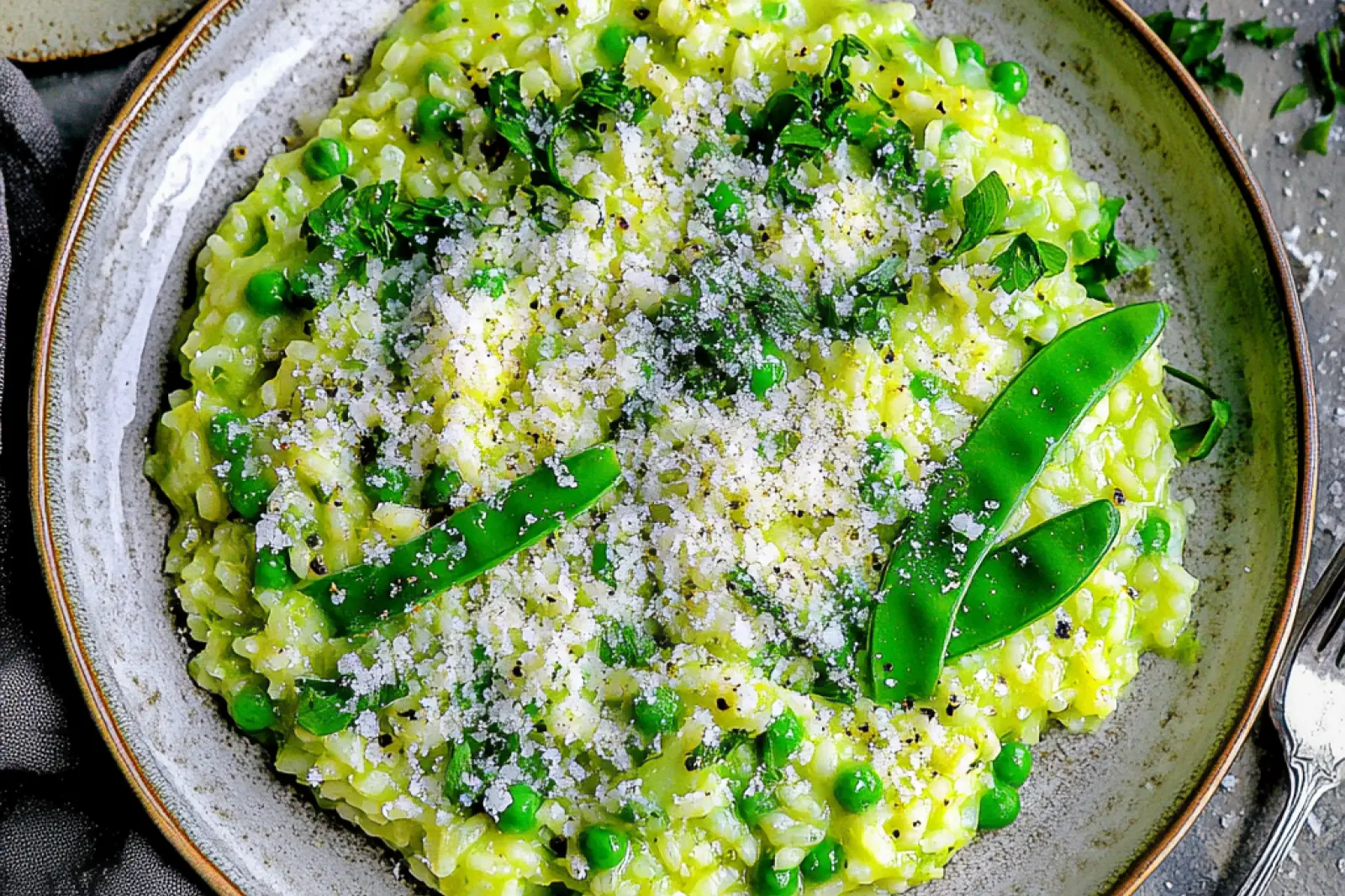
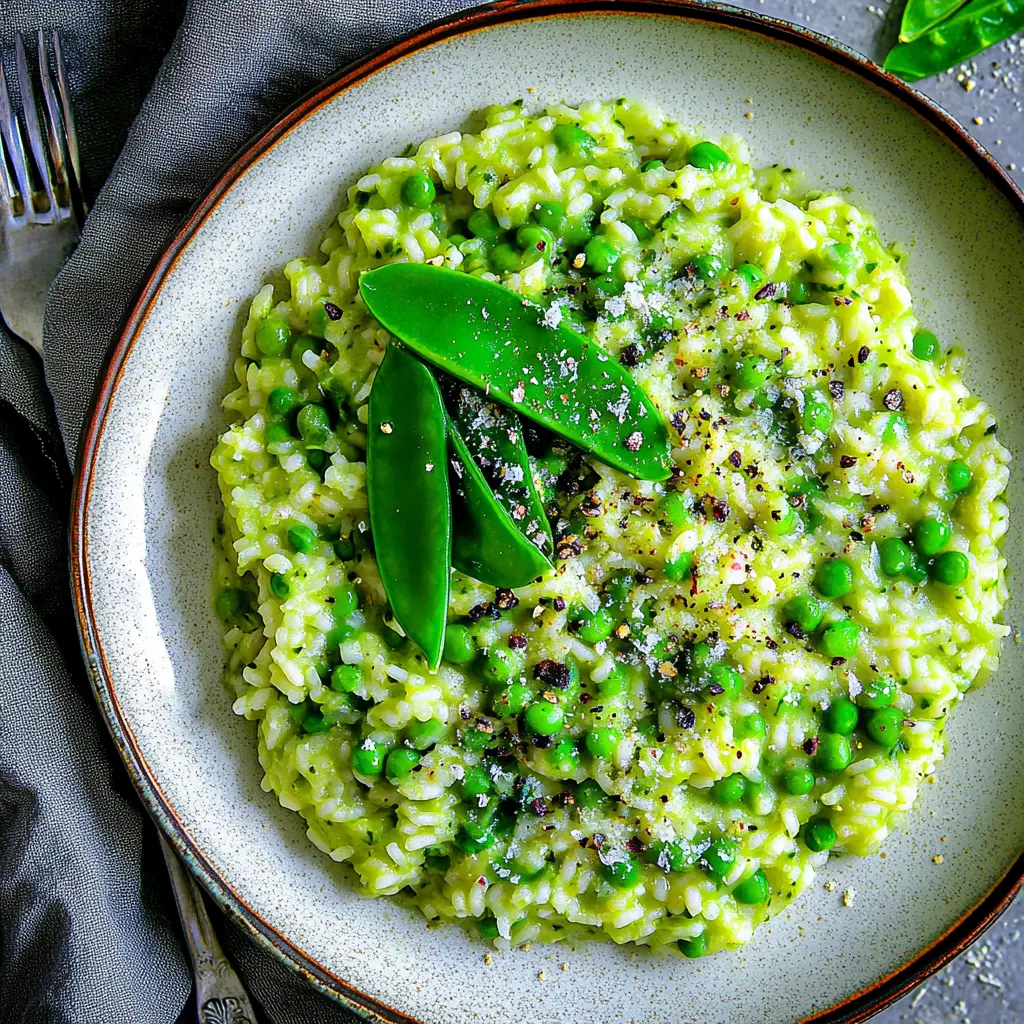
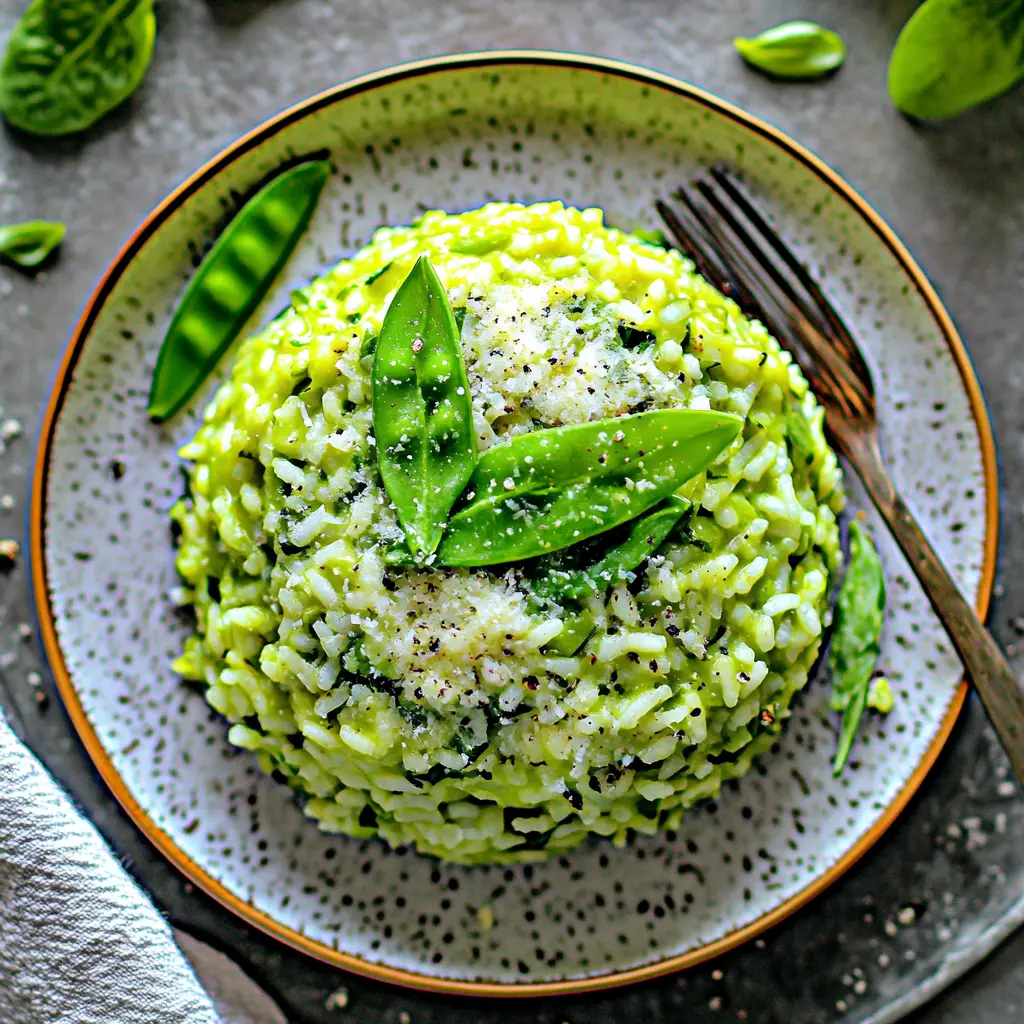
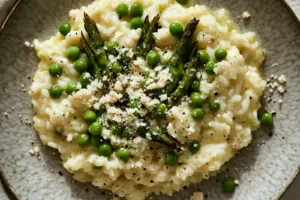
Sweet peas hitting a pan of creamy, buttery rice that’s the moment you know spring’s really here. Spring Pea Risotto is tender, bright, and just comforting enough without feeling heavy, which is exactly what I need this time of year.
I started making this back in 2019 when I was testing lighter risotto methods for my test kitchen, and I remember tasting it and thinking, “Finally something that feels like a reset.” The trick is stirring just enough to release the starch without babysitting the pot, so you get that signature creaminess without the stress. After a long day, I need dinner to be comforting but not heavy and this one hits that balance every single time.
Joe Rooney
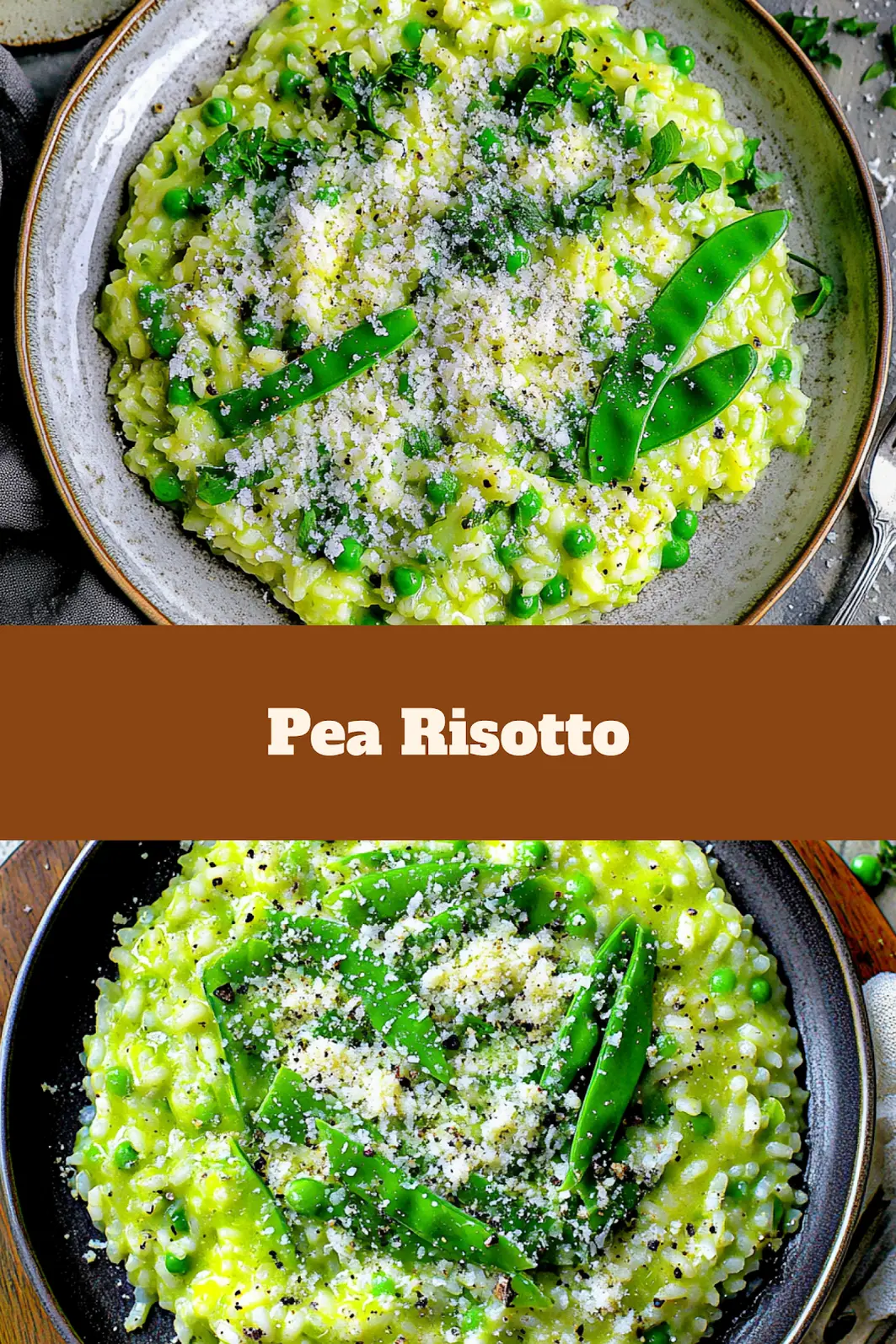
Spring Pea Risotto Easy Recipe for Busy Weeknights
This vibrant Spring Pea Risotto makes an easy dinner perfect for busy weeknight meals. With fresh or frozen peas, lemon zest, and fresh mint, this simple spring recipe delivers bright, savory flavors that the whole family will enjoy. It’s a quick risotto that can be served as a satisfying vegetarian dish or topped with pan-seared fish or scallops for an elegant family dinner.
1/2 cup dry white wine or sub water with 1 teaspoon lemon juice
2 cups peas, fresh blanched or sub frozen peas
1/2 cup grated Pecorino cheese or sub-parmesan cheese
zest of one lemon
salt and pepper to taste
1/4 cup fresh mint, packed, sliced
Drizzle of truffle oil
Method
Warm the vegetable broth in a medium saucepan and keep it hot on the stove.
Heat 2 tablespoons of olive oil in a heavy-bottom pot over medium-low heat; sauté the shallots and garlic until they turn golden and aromatic, about 5 minutes.
Add the Arborio rice and stir continuously for about one minute so the grains are well coated with oil and fragrant.
Pour in the white wine to deglaze the pan and cook until the liquid has evaporated.
Begin adding the hot broth one cup at a time, stirring every 45 to 60 seconds until the liquid is mostly absorbed before adding the next cup; continue this gradual addition over 20 minutes until the rice is cooked through but still has a slight bite.
Meanwhile, bring salted water to a boil in a separate pot, add the peas, and cook for 2 to 3 minutes until tender; drain and set aside.
In a blender, combine half a cup of the blanched peas with half a cup of water and 1 tablespoon of olive oil, blending until smooth; add a handful of spinach and blend again until completely blended, adding a little water if necessary.
Once the rice is tender, gently fold in the grated Pecorino cheese, lemon zest, remaining blanched peas, and the pea puree, seasoning with salt and pepper to your taste.
Add two-thirds of the fresh mint into the risotto mixture and stir; keep the rest for garnish.
Taste the risotto and adjust seasoning with additional salt, pepper, lemon, and chili flakes if desired.
Serve the risotto in bowls and finish with a drizzle of truffle oil and the reserved mint leaves for garnish.
Notes
For an extra smoky touch, stir in a few tablespoons of finely diced Spanish Chorizo with the shallots and garlic at the start. To turn this into a heartier meal, add pan-seared fish or scallops on top as suggested. Fish options like halibut, salmon, or sea bass work well. If using skin-on fish, crisp the skin by cooking it skin side up.
Optional toppings include Aleppo chili flakes, microgreens, or sautéed mushrooms for extra flavor and texture.
Why You’ll Love This Spring Pea Risotto
This is the kind of meal that feels like a gentle reset after a long daycreamy, bright, and surprisingly simple. You’re getting all the cozy comfort of risotto without the fuss, and the fresh peas and lemon bring just enough brightness to keep it from feeling heavy.
Weeknight-friendly: It comes together in under an hour, and you don’t need to stand there stirring nonstop.
Flexible ingredients: Fresh or frozen peas both work beautifully, so you can make it any time of year.
Vegetarian on its own: Satisfying as-is, or you can top it with seared fish or scallops for something special.
Tested and reliable: I’ve made this dozens of times, tweaking the timing and technique so it works every single time.
What Makes It Work
The secret to creamy risotto isn’t constant stirringit’s patience and warm broth. Arborio rice releases starch slowly as it absorbs liquid, creating that silky texture without needing cream. Adding a pea puree at the end gives you vibrant color and an extra layer of sweetness that balances the sharpness of the pecorino cheese and lemon zest.
Pro Tip: Keeping your broth warm in a separate pot means the rice cooks evenly and doesn’t cool down every time you add liquid. It’s a small step that makes a big difference.
Key Ingredients You’ll Need
Everything here is straightforward and easy to find at your regular grocery store. Here’s what you’re working with:
Arborio rice: The short-grain rice that creates that signature creamy texture.
Vegetable broth or chicken stock: Warmed and ready to gothis is your flavor base.
Peas: Fresh or frozen both work. You’ll blanch some and blend others into a silky puree.
Shallots and garlic: The aromatic foundation that builds savory depth.
Pecorino cheese: Adds a salty, tangy richness. Parmesan works too.
Lemon zest and fresh mint: Brightens everything up and makes it taste like spring.
Dry white wine: Deglazes the pan and adds a subtle acidity. You can swap it for water with a teaspoon of lemon juice if needed.
Simple Swaps and Tweaks
One of the best things about this recipe is how adaptable it is. Here are a few easy ways to make it your own:
Ingredient
Swap Option
Shallots
Use 1 leek or 1 white onion, diced
Pecorino cheese
Parmesan cheese works perfectly
Dry white wine
Water + 1 tsp lemon juice
Fresh peas
Frozen peas (no blanching needed)
Vegetable broth
Chicken stock for deeper flavor
Optional additions: A drizzle of truffle oil elevates it instantly. You can also stir in Aleppo chili flakes, sautéed mushrooms, or even a few tablespoons of diced Spanish chorizo for a smoky twist.
How to Make It
Start by warming your broth in a medium potkeep it on low heat so it’s ready when you need it. In a heavy-bottom pot or Dutch oven, heat olive oil over medium-low and sauté your shallots and garlic until they’re golden and fragrant, about 5 minutes. Stir in the arborio rice to coat it in the oil, then add the white wine and let it simmer until fully absorbed.
Now comes the rhythmic part: add one cup of warm broth at a time, stirring every 45–60 seconds and letting the rice absorb it slowly. This takes about 20 minutes total. While that’s going, blanch your fresh peas in salted boiling water for 2–3 minutes, then blend half of them with water and olive oil until silky smooth.
When the rice is tender, fold in the pecorino cheese, lemon zest, blanched peas, and pea puree. Stir in most of the fresh mint, saving a little for garnish. Taste and adjust with salt, pepper, and more lemon if needed. Divide into bowls, drizzle with truffle oil, and finish with the reserved mint.
Serving and Storage Tips
This risotto is delicious on its own, but it also makes a beautiful base for seared fish, shrimp, or scallops. Just season with salt and pepper, sear until golden on both sides, and place right on top. A squeeze of lemon ties it all together.
Storage
Instructions
Refrigerator
Store in an airtight container for up to 3 days
Reheating
Warm gently on the stovetop with a splash of broth or water to loosen
Make-ahead tip
Cook rice to just underdone, then finish with peas and cheese right before serving
Note: Risotto thickens as it sits, so don’t worry if it looks a little loose when you first finish it. It’ll firm up slightly as it cools.
Craving delicious recipes and fresh cooking inspo? Follow me on Pinterest!
FAQs ( Spring Pea Risotto )
Can I use frozen peas instead of fresh?
Absolutely! Frozen peas work wonderfully and are often sweeter than fresh ones. Add them directly to the risotto during the last 2-3 minutes of cooking without thawing first. This prevents them from becoming mushy while maintaining their vibrant color and texture.
What type of rice works best for this recipe?
Arborio rice is the gold standard for creamy risotto texture. Carnaroli and Vialone Nano are excellent alternatives if available. These short-grain varieties release starch gradually, creating that signature creamy consistency without becoming gummy.
How do I know when the risotto is perfectly cooked?
The rice should be tender with a slight bite (al dente) and the texture should be creamy, not soupy or stiff. It should flow like lava when you shake the pan gently. This usually takes 18-20 minutes of gradual broth addition and stirring.
Can I make this dish ahead of time?
This meal is best served immediately for optimal texture. However, you can prep ingredients beforehand and cook the base risotto 3/4 of the way, then finish it when ready to serve. Reheat gently with extra warm broth to restore creaminess.
What wine pairs well with pea risotto?
A crisp Sauvignon Blanc or Pinot Grigio complements the fresh pea flavors beautifully. For white wine in the cooking process, use the same wine you plan to drink. The acidity enhances the dish’s bright spring flavors perfectly.
Final Thoughts
You’ll love how this Spring Pea Risotto turns outcreamy, bright, and ready in under an hour without constant stirring. It’s the kind of dinner that feels like a gentle reset, especially after one of those long, busy days. The peas stay sweet, the lemon zips it all up, and that first bite just tastes like springtime in a bowl.
If you want a little more richness, stir in an extra pat of butter at the endit makes everything glossy and lush. Leftover risotto? Spread it in a baking dish, top with breadcrumbs and cheese, and bake until golden for crispy risotto cakes the next day. I learned that trick from my grandmother’s kitchen, and it’s saved many a leftover night. And if you’re serving this for guests, a drizzle of truffle oil and a few microgreens make it look restaurant-worthy with zero extra effort.
I’d love to see how yours turns outsnap a photo and tag me, or leave a comment below if you tried a fun twist. Did you grow up with a version of this, maybe with different greens or herbs? There’s something so comforting about meals that feel both nourishing and easy, the kind you can count on when you need dinner to just work. Save this one for your family, share it with a friend who needs a simple spring meal, or keep it bookmarked for your next weeknight win. Here’s to dinners that help you get back into a rhythm.