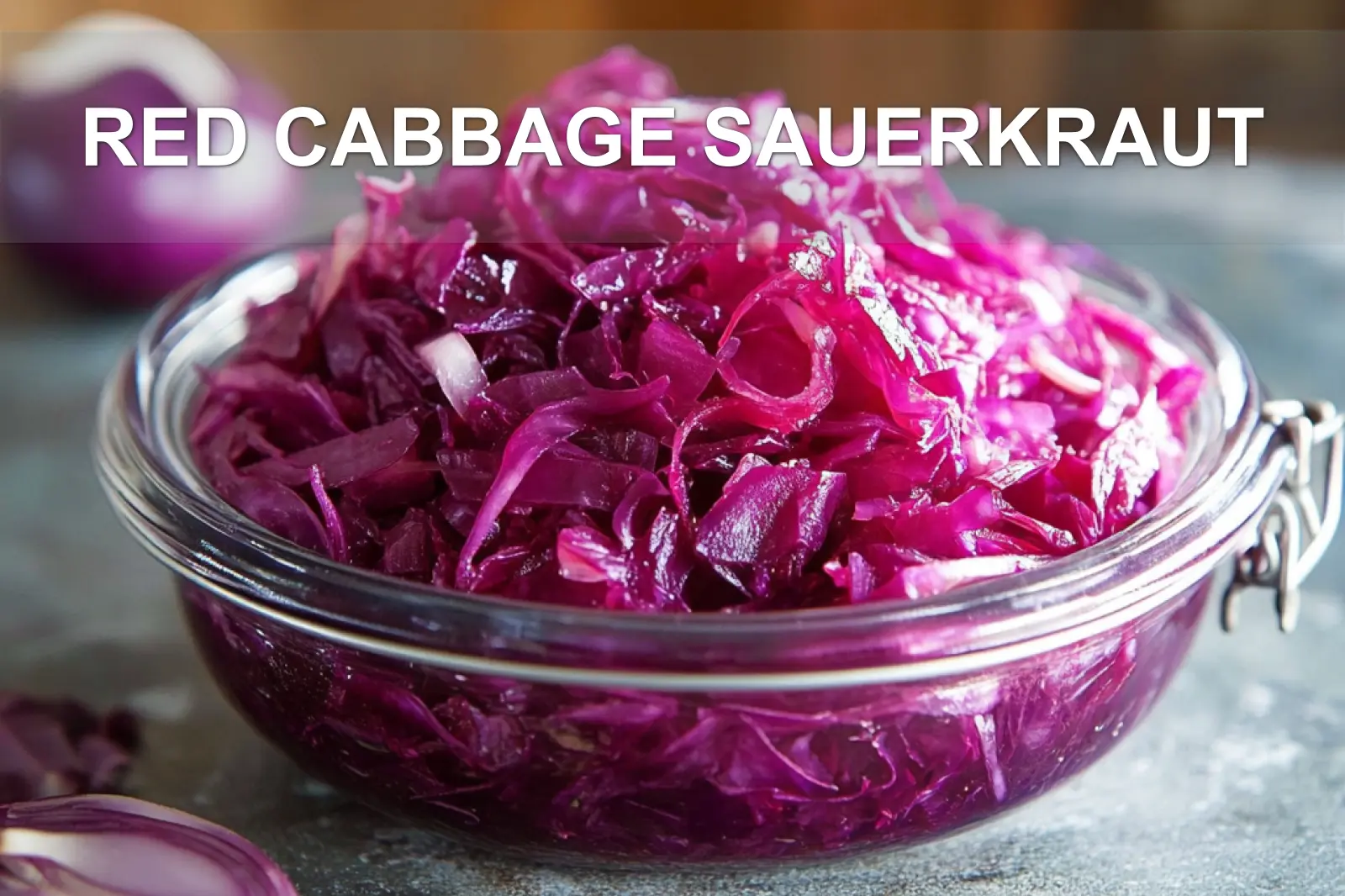
Remove any damaged outer cabbage leaves and rinse the rest to clean them.
Cut the cabbage into thick ribbons about 3/8 – 1/2 inch wide, discarding the dense core.
In a large bowl, toss the cabbage slices with sea salt and let them rest for about 30 minutes until they release moisture.
Mix in the juniper berries and caraway seeds with the cabbage and salt.
Transfer the cabbage and all its liquid into your fermentation vessel, such as a crock, a gallon jar, or mason jars with airlocks.
Firmly press down the cabbage using your hands or a tool to squeeze out more liquid that covers the cabbage.
If needed, repeat compressing over the next hour to keep cabbage submerged; add chlorine-free water to cover by an inch if liquid is insufficient.
Place a weight on top of the cabbage to maintain pressure and seal out oxygen, using fermentation weights or a loose water-filled plastic bag.
Cover your fermenting container with a lid, cloth, or airlock as appropriate.
Allow the cabbage to ferment for at least 2 to 3 weeks, or longer for a tangier flavor.
Once it reaches your preferred sourness, store the sauerkraut in the refrigerator, preferably in mason jars ready for gifting.