Straight from the flour-dusted corners of my childhood kitchen, this Ciabatta Bread Recipe brings back the smell of warm crust and Saturday mornings. It’s all over Pinterest lately that airy inside, that golden, crackly crust. You’ll need under 30 minutes of hands-on work and a touch of patience. No bread-making degree required.
This is a no-fancy-tools, pantry-happy loaf. Just flour, salt, water, and a bubbly starter for bread. It’s part of what makes that iconic Artisan Ciabatta Bread texture all soft holes inside and crispy magic on the outside. Honestly? Like a buttery cloud in crusty loaf form. Full details in the blog!
I was raised around wood tables, flour under fingernails, and a lot of Croatian bread recipes. This loaf? Feels like that honest, simple bread that feeds the home, not just the belly. I tested it till it sang in the oven. Wait till you see my favorite baking tip inside!
Why You’ll Love This Ciabatta Bread Recipe
This Artisan Ciabatta Bread has everything we adore about classic homemade breads:
No fancy tools needed: A bowl, your hands, and pantry staples are all it takes.
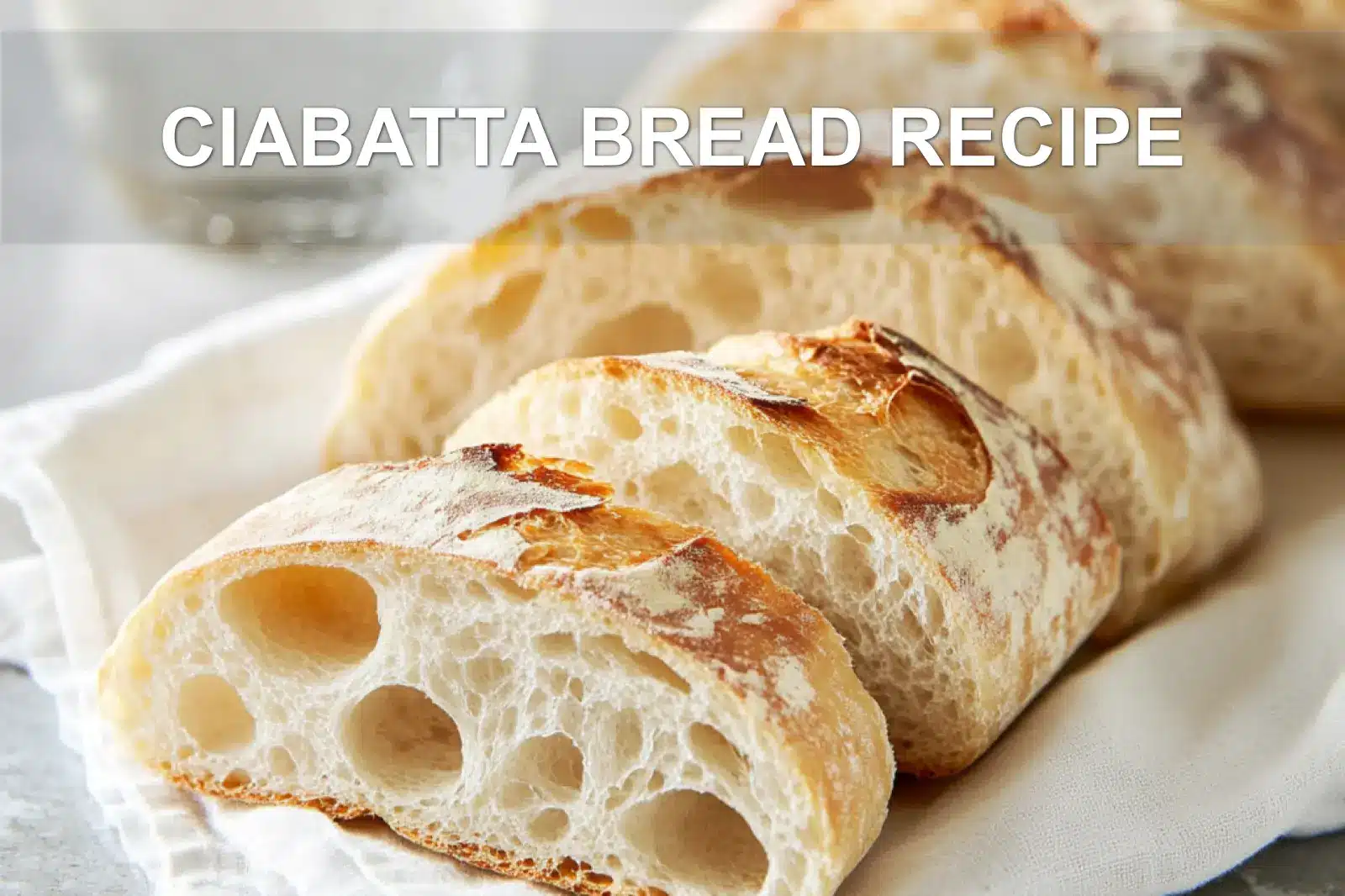
That perfect texture: Crusty on the outside, airy and chewy on the inside. It’s an artisan loaf bread you’ll come back to again and again.
So versatile: Enjoy it as a sandwich base, dipped in olive oil, or paired with souppure comfort food bliss!
Beginner-friendly: Follow the detailed steps below and watch your dough transform into something bakery-worthy.
Key Ingredients Breakdown
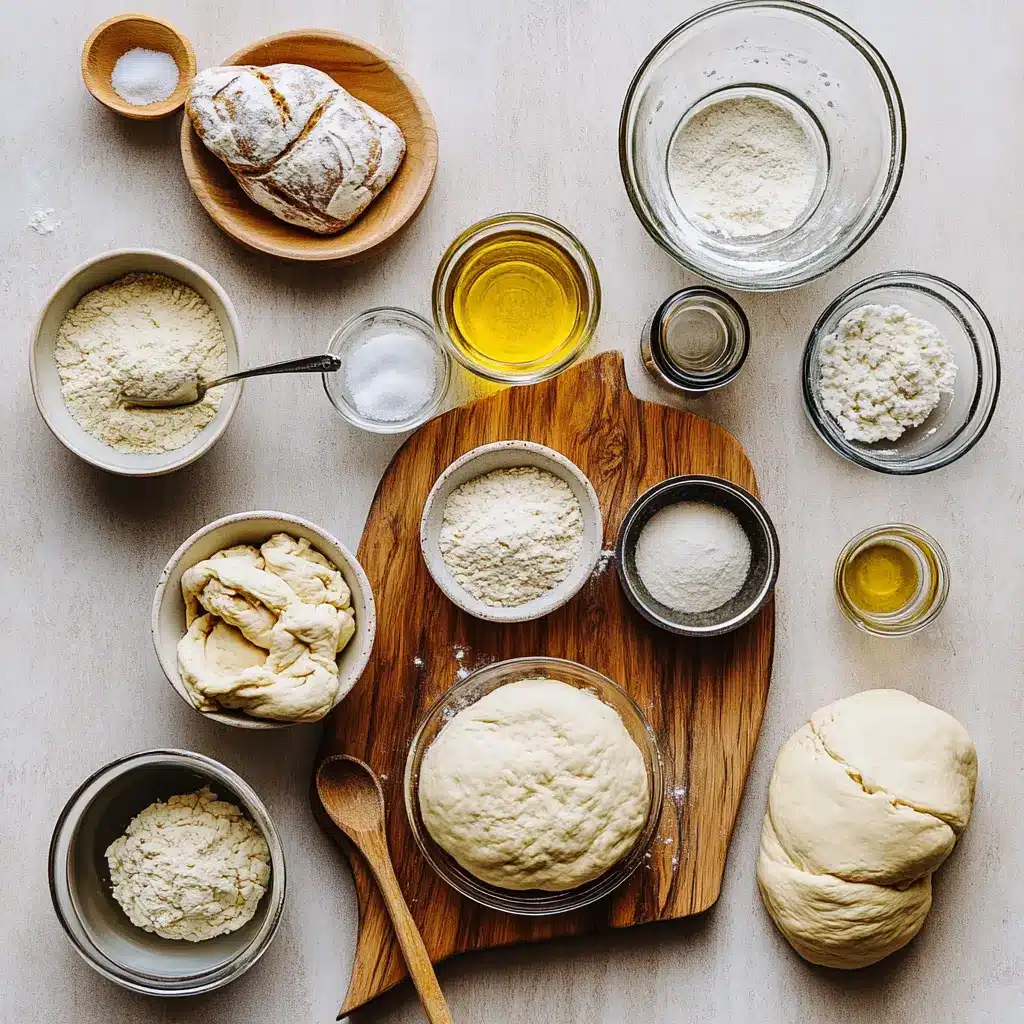
This recipe uses just a few ingredients to achieve that irresistible crunchy bread crust and tender crumb. Here’s what each one does:
All-purpose flour: It provides the structure for your loafit doesn’t get more classic than this.
Instant yeast: This is your fermenting magicno need to proof it beforehand!
Warm water: Helps activate the yeast and create the soft, elastic dough you need for that iconic ciabatta texture.
Salt: Essential for flavor and balancing the yeast so your bread rises perfectly.
Olive oil: Adds richness and helps with that beautifully golden crust.
Ingredient
Amount (1x recipe)
Purpose
All-purpose flour
4 cups (500g)
Structure for dough
Instant yeast
1 ½ tsp (5g)
Helps dough rise
Warm water
1 ¾ cups (410ml)
Activates yeast
Salt
2 tsp (10g)
Flavors dough
Olive oil
3 tbsp (45ml)
Richness + crust
Simple Step-by-Step Instructions
Let’s break down how to make this ciabatta bread recipe into easy, manageable steps. You’ve got this!
Mix your dough: Stir the flour and salt together in one bowl. Add yeast to warm water in another bowl until dissolved, then combine the two until a shaggy dough forms.
Knead it out: Turn the dough onto a lightly floured surface and knead for about 10 minutes until it’s smooth and elastic.
First rise: Pop the dough into a greased bowl, cover it, and let it rise for about an hour or until it doubles in size.
Shape & rest: Divide the dough into two, shape into oval loaves, and let them rest on a parchment-lined baking sheet for 30–45 minutes.
Bake: Preheat your oven to 425°F (220°C), drizzle the loaves with olive oil, sprinkle with salt, and bake for 20–25 minutes until golden brown.
Step
Key Action
Timing
Mix Dough
Combine ingredients
10 min
Knead
Work dough to smooth
10 min
First Rise
Let dough double
1 hour
Second Rise
Shape and rest
30–45 min
Bake
Cook until golden
20–25 min
Troubleshooting & Tips
Bread-making is an art, and a few pointers can ensure your success:
Sticky dough? No worries! Ciabatta dough is naturally wetter than other breadsthat’s what helps create the airy structure. Lightly flour your hands and surface to manage it.
No rise? If your dough doesn’t double, your yeast may be expired, or the water may have been too hot or too cool to activate it.
Flat loaves? Be gentle when transferring your shaped dough to the baking sheet to avoid deflating the air pockets.
Crust not crunchy enough? Spritz the inside of your oven with water a few times while baking for a crisp, artisan-style crust.
Serving & Storing Your Ciabatta
Once your artisan ciabatta bread is cool, it’s ready to serve:
For serving: Slice and enjoy with butter, olive oil, or as the base for sandwiches. It’s also perfect alongside soups or stews!
To store: Wrap in parchment or a clean towel and keep at room temperature for up to 2 days. For longer storage, freeze slices in an airtight bag for up to 3 months.
Storage Method
How Long
Instructions
Room Temperature
2 days
Wrap in parchment or towel
Freezer
3 months
Slice, bag, and freeze
Expert Insight: Mastering the Texture of Ciabatta
Achieving the ideal crumb and crust in a ciabatta bread recipe hinges on proper hydration and gentle handling of the dough. The high water content creates those signature airy holes, while minimal kneading preserves the delicate gluten structure, resulting in a light yet chewy loaf that’s truly irresistible.
For more delicious recipes and cooking inspiration, follow me on Facebook, Pinterest and Reddit!
Crafting the Perfect Ciabatta Bread Recipe
This ciabatta bread recipe didn’t come together overnight; after several attempts with sticky dough and patience-testing rises, I finally nailed the ideal crust and airy crumb. Each try brought me closer to a loaf that feels both authentic and approachable, a recipe shaped by experience and authentic kitchen moments.
FAQs ( Irresistible Ciabatta Bread Recipe for Perfect Baking )
What makes ciabatta bread different from other artisan breads?
Ciabatta bread is distinguished by its incredibly high hydration dough, which creates its signature open, airy crumb structure with large irregular holes. Unlike denser artisan loaf breads, ciabatta has a thin, crispy crust that shatters when you bite into it, revealing the light, chewy interior. The wet dough requires special folding techniques rather than traditional kneading, making it a unique challenge even for experienced bakers. This Italian bread’s name literally means “slipper” due to its flat, elongated shape that resembles old-fashioned footwear.
Do I need a starter for bread making authentic ciabatta?
While traditional ciabatta uses a biga (Italian pre-ferment), you don’t necessarily need a sourdough starter for bread making to create delicious ciabatta at home. Many excellent ciabatta recipes rely on commercial yeast with a long, slow fermentation process that develops complex flavors naturally. However, using a starter for bread will definitely elevate your loaf with deeper, more nuanced flavors and improved digestibility. If you’re just starting out, focus on mastering the high-hydration dough technique first, then experiment with starters once you’re comfortable with the basic process.
Why is my ciabatta not getting that crusty loaf bread texture?
Achieving that perfect crusty loaf bread exterior on ciabatta requires creating steam during the first part of baking, then allowing the crust to crisp up in dry heat. Place a pan of hot water in the bottom of your oven or spray the walls with water just after loading your bread. Your oven temperature should be high (around 450-475°F) to create that initial steam burst that helps form the crust. Make sure to remove the steam source after 15-20 minutes to allow the crust to become golden and crunchy. Also, avoid opening the oven door during the first half of baking, as this releases crucial steam.
How long does homemade ciabatta bread stay fresh?
Fresh ciabatta bread tastes best within 24-48 hours of baking, when the crust is still crispy and the interior remains perfectly chewy. After that, the crust will soften and lose its delightful crunch, though the bread is still perfectly edible for 3-4 days when stored in a paper bag or bread box. Never store ciabatta in plastic, as this will make the crust soggy immediately. To refresh day-old ciabatta, pop it in a 350°F oven for 5-10 minutes to crisp up the exterior again. For longer storage, slice and freeze portions, then toast directly from frozen.
What are the most common mistakes when making airy bread recipes like ciabatta?
The biggest mistake with airy bread recipes is adding too much flour because the dough feels too sticky – resist this urge completely! Ciabatta dough should be wet and almost unmanageable, which is what creates those beautiful air pockets. Over-handling or trying to knead the dough traditionally will destroy the delicate gluten structure needed for the open crumb. Another common error is not allowing enough fermentation time, which develops both flavor and the gas bubbles that create the airy texture. Finally, many bakers shape the dough too roughly, deflating all those precious air bubbles you’ve worked so hard to develop through gentle folding.
Yesica Andrews
Ciabatta Bread Recipe: Easy and Irresistible Artisan Loaf
This artisan ciabatta bread recipe delivers a crusty loaf bread with an airy and chewy interior. Perfect for anyone looking to master airy bread recipes at home, this easy ciabatta recipe fills your kitchen with the irresistible aroma of freshly baked artisan bread. Ideal for sandwiches, dipping, or enjoying alongside your favorite meals.
Gradually mix the yeast mixture into the flour until a shaggy dough forms.
Knead on a floured surface for about 10 minutes until smooth.
Place dough in a greased bowl, cover, and let rise for about an hour or until doubled.
Punch down the dough, divide it into two pieces, and shape each into an oval loaf.
Let loaves rise on a parchment-lined baking sheet for another 30-45 minutes.
Preheat oven to 425°F (220°C), drizzle loaves with olive oil, sprinkle with sea salt, then bake for 20-25 minutes until golden brown.
Notes
For best results, use bread flour instead of all-purpose flour. Allow the bread to cool completely before slicing to maintain its airy texture. Store in an airtight container for up to 3 days or freeze for longer storage.